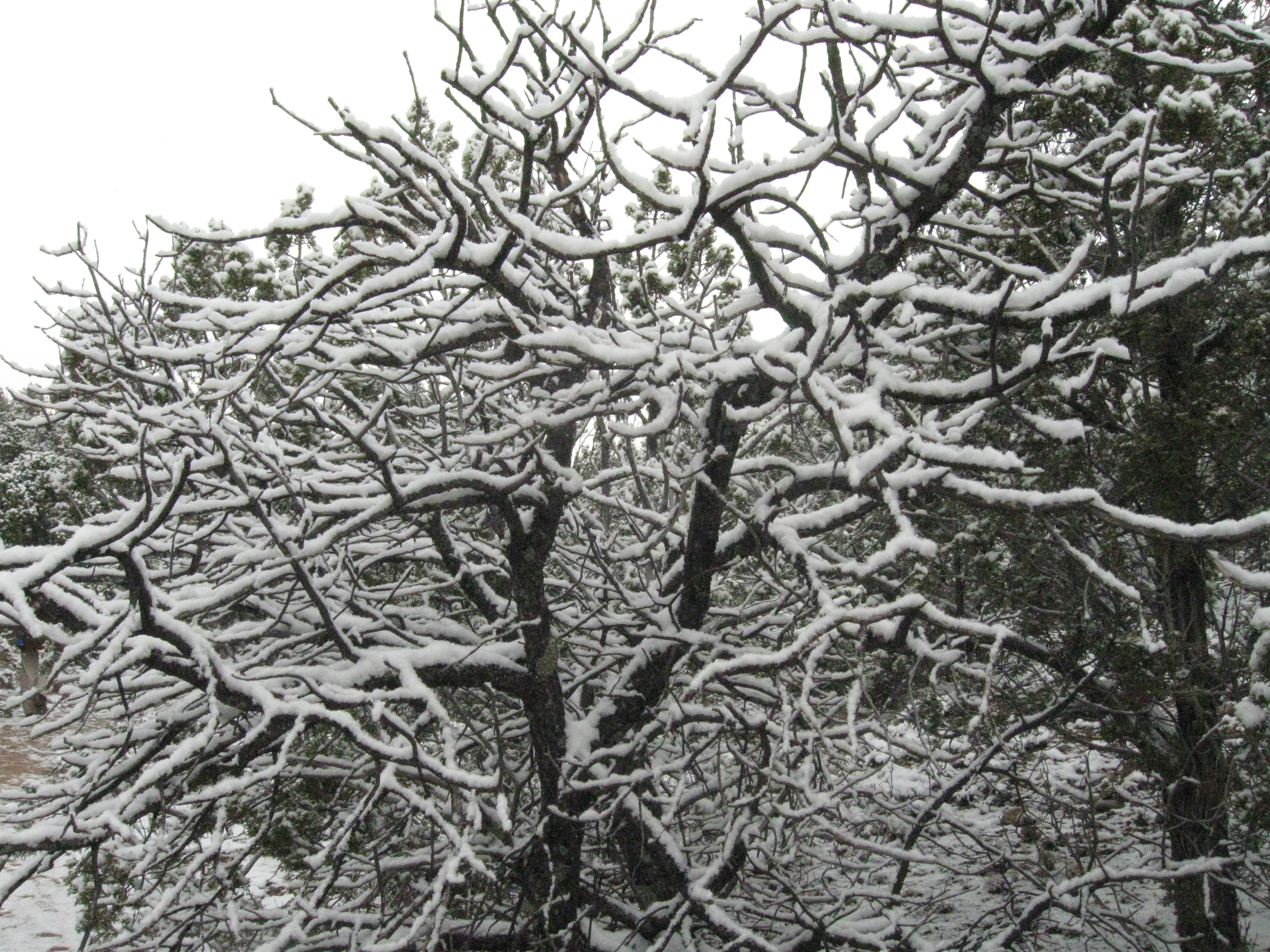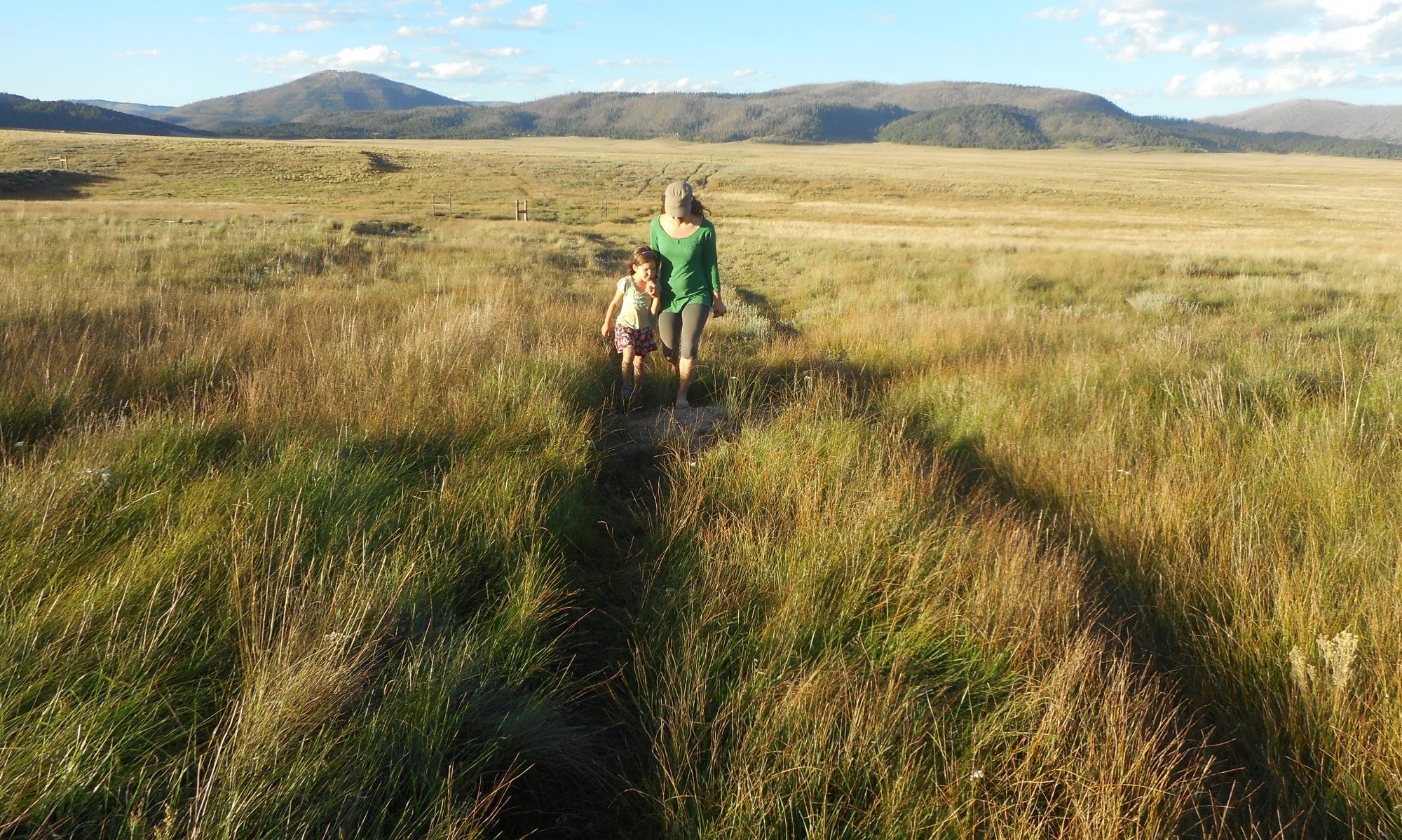
The snow that fell on these dry hills we call home
and the sturdy, warm boots we wear for walking them.
That’s what made this week’s recipe taste so very good.
So far nobody has asked us why we’re taking a plastic fast. Seems to me that we’re not alone in wanting to clean up our act. What we get asked about is exactly how it is we plan to get by without the substance that seems to be literally engulfing the planet.*
Good question. A few weeks ago, I couldn’t have begun to answer it. I was busy filling my cart with what looked good, had a USDA organic label on it, and was cheap. Yep, that included a lot of plastic wrap, bottles, tubs, and bags. No doubt about it: food is at the crux of our plastic habit. Maybe that’s why it seems so difficult to “live” without it. I’ve done some thinking since then. And started making changes, some of them so simple I’m embarrassed it took a vow of abstinence to implement them. From easiest to most challenging, here’s the general program:
:: If we can find an alternative to plastic, we get it. This means simply choosing the product packaged in paper or glass (metal lids a bonus), or sold in bulk. It does occasionally take an additional twenty seconds of scanning the shelves before finding the plastic-free item in question.
:: Lots of things we’re learning to make from scratch. Mostly for the fun of it. But also because we can’t live without yogurt, tortillas, ricotta, and cookies.
:: A few things we’ll have to compromise on, like toothpaste caps.
:: Some things (like tortilla chips) we’ll have to go way out of our way to get (from the burrito stands that make them fresh).
:: And some things we’ll do without altogether.
So far we seem to be getting by just fine, with the unexpected side effect of eating healthier than we have in years. Our food is fresh, whole, and, more than ever before, local. Got suggestions or questions? Holler, please.
*In the movie Addicted to Plastic it is estimated that there are 46,000 pieces of plastic for every square mile of ocean, and that the ratio of plastic to plankton is 10:1.


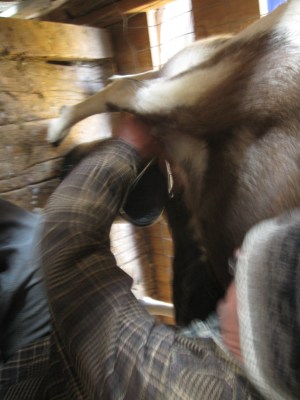
If this plastic free business is our way of fighting the good fight while living the good life, then two goats down the road are our secret weapon. This fall we joined a milking co-op run by a community of friends a short walk away. Our Friday morning share supplies us with a week’s worth of milk and gives us a taste of the farm life here in Old Santa Fe. All in just one bitterly-cold-crack-of-dawn milking extravaganza per week.
It adds a certain rhythm to our days, that bounty of six or so quarts the Mamas give us. There’s yogurt to be mixed up and incubated (and hopefully not forgotten). There’s cuajada (see below) to make from raw, still-warm-from-the-udder milk, and then bread to be made from the leftover whey. Later in the week I’ll cook up another batch of cheese, this time my beloved panir or ricotta or queso blanco, depending on what’s for dinner.
I’ve heard it said that eating cheese made from fresh goat milk is like eating a whole meadow. The goats are lovely, to be sure. But the only requirement for all this home made goodness is milk, and that can come from a cow and the store. Of course, you could get your own goats, like this gal did. Or, ask around. You might be surprised how many goats can be found in the back yards of urban neighborhoods, their milkers eager to sleep in one morning a week so that you, too, can discover the pleasures of being sustained by the milk of a gentle, sweet eyed creature.
To make a soft, mild cheese called cuajada: add 5 drops of vegetable rennet per quart of warmish (80 degree) milk. Let sit for thirty minutes or until firmed up. Cut into “cubes,” then gently ladle curds into a colander lined with a tightly woven cheesecloth. Let drain to desired consistency. This Nicaraguan style cheese doesn’t melt when heated, and so is great in quiches, stir fry’s, and pasta dishes. It also spreads onto bread and tops salads beautifully.
Want to go plastic free but don’t have goats or time for cheese making? Ask at the deli of your grocery store for a portion of bulk cheese wrapped in butcher paper.

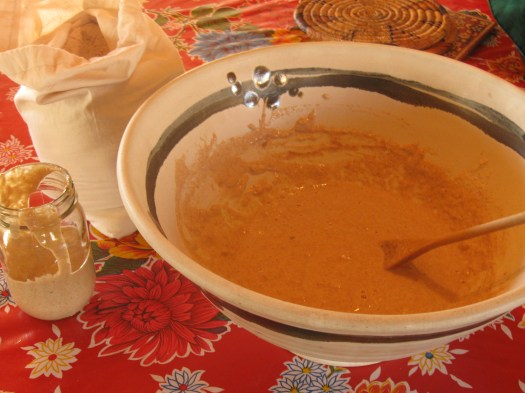
Begin with a heap of faith that the wild yeasts will land in the wet dough you set out in a corner of the kitchen. Pray that they colonize peacefully and bubble and alchemize into the promise of bread. Do not fret about the smell. This is fermentation, after all.
After three days expand the starter with flour and water and hope. Leave overnight.
Doubt the results but forge ahead. Coax the yeasties. Tell them, this, This! is what you were meant for. Rise you yeasties, rise!
Add a smidge of baking yeast from the freezer. Do not despair! All is not lost. Only helped along.
It rises. Oh, joy! Knead and let rise again. Bake and be grateful for any extra rising. But do not expect it.
Exclaim in wonder, the fresh loaves so lovely and the smell, why, its heavenly. Sourdough!
Slice and serve your family without apology for the dense bread. Say, If ever we had only water and flour, this bread could still be made with nothing more than the lively air and a hot oven. We will always have bread!
In the meantime, keep practicing.
this week’s recipe brought to you by

warm, clear days and the color they contain
kindred spirits everywhere
-thank you-


So how does one get by without plastic? I lost a bit of sleep, I’ll confess, when faced with the conundrum of how to bring my produce and bulk food home without plastic sacks. That the bags offered at our local health food stores were supposedly biodegradable did not comfort me. I wanted to get to the next level. Without having my broccoli wilt a day after bringing it home.
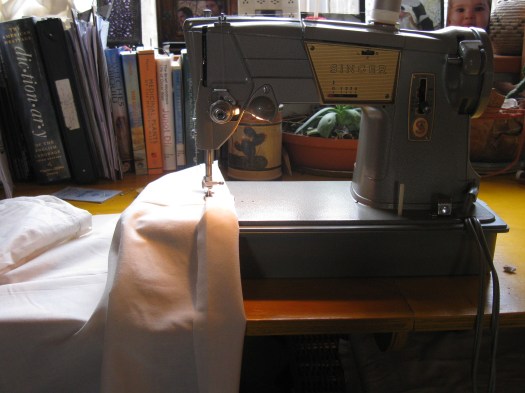
The answer, it seems, is cloth. For under ten dollars I made two dozen drawstring muslin bags of all sizes, for everything from huge heads of kale to poppyseeds. I empty the bulk foods into jars once home from the store. Flours get to stay in their sacks because they are stored in the fridge. So far all durable produce like kale and carrots and broccoli is staying fresh. If I notice something drying out a bit, I spray the bag with a little water. And I do use everything within a week.
Did you know you get bag credit for every bag you bring, not just the grocery sacks that cart everything home? Or that it makes you feel like a million bucks to get home from the store without a single plastic bag to worry about an albatross eating? That keeping food in cloth and glass feels, well, nicer to the food? And that many stores sell muslin bags readymade for your shopping pleasure?
Now we both do.

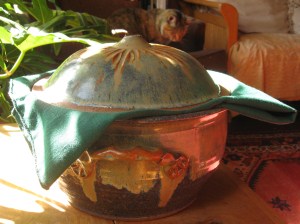
This clay pot made it to one potluck before the knob broke off its lid and it was relegated to a high, forgotten shelf in the kitchen where it has been collecting dust for years. It is now our bread bowl. How we survived so long without such a utilitarian piece of handmade beauty gracing our everyday lives, I know not. It keeps our bread fresh without refrigeration or plastic bags, and gives us something lovely to look at and handle during the ordinary act of putting food on the breakfast table.
There are lots of reasons to forego plastic. There is the harm it inflicts to the land and ocean during its production and disposal, and the danger it poses to animals and to our own bodies. There are the questionable ethics of using petroleum and natural gas products, and the simple yearning to live with less impact.
But today the reason I care the most about is this: Living without plastic can make life more beautiful.


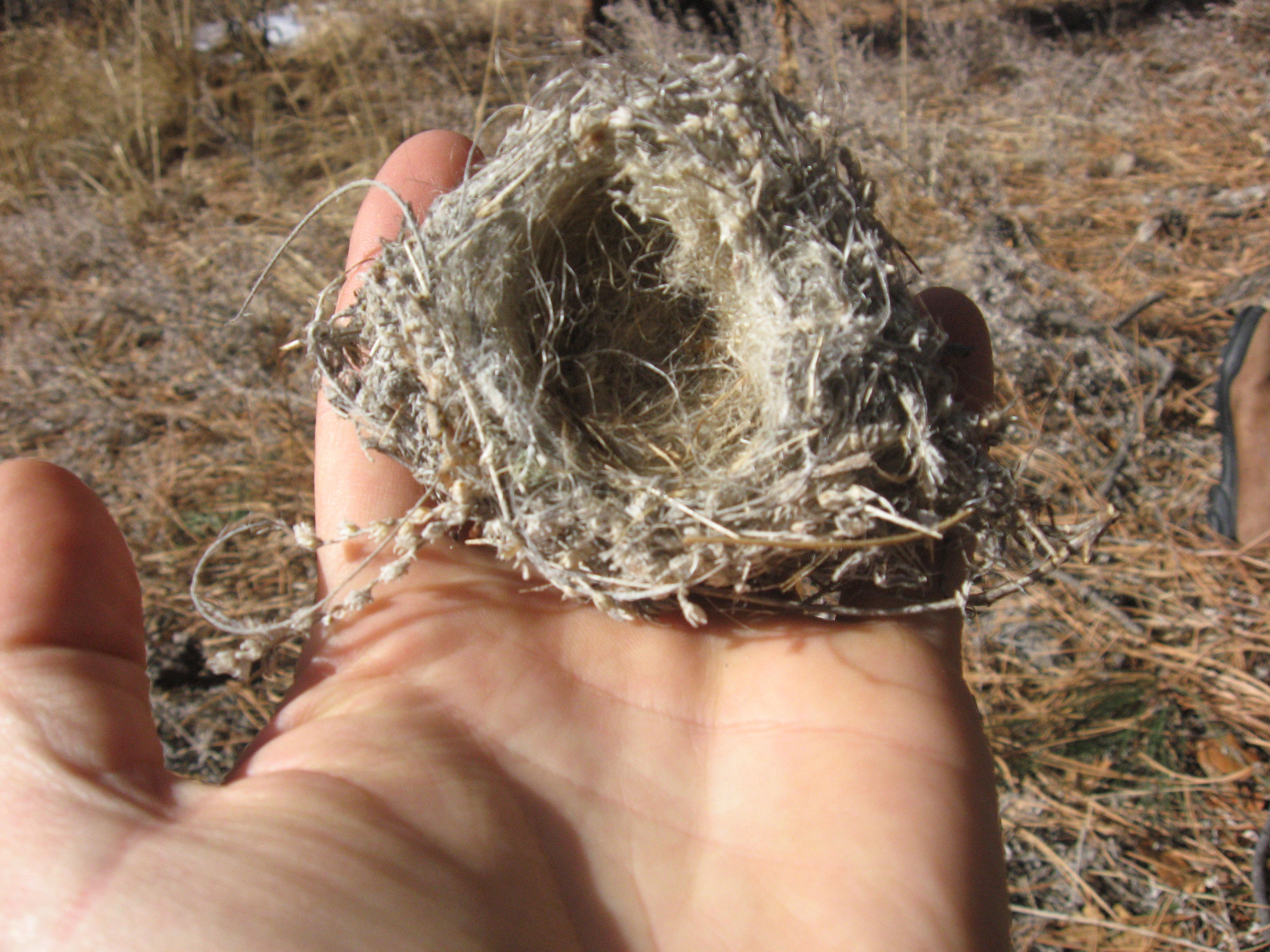
I’m feeling a bit more willing to say goodbye to fall now that some last minute herb harvesting has been done. These dried Calendula flowers are destined to bring sunshine to our tea this winter, and a steeped oil of them will get pressed this week and made into a rich, golden salve for our wounds. Mama brought some chokecherry branches down from the mountains. The bark peeled off into red lengths that smell like a medicinal, fruity almond wood. Steeped overnight in cold water and sweetened with honey, it will make an able cough syrup for the inevitable next round of el grippe.
And speaking of harvests, Earth Care’s 2010 edition of The Sustainable Santa Fe Guide is ripe for the picking all over Santa Fe. It will also soon be available for viewing here. I had the pleasure of working on the guide as a contributing editor, and was moved by many of the articles on everything from how stories can tap the power of place to guerilla gardening to bringing our endangered river back to life.
Even with the fruits of the late fall season falling on my doorstep, I’m in no hurry for the last color to fade away. Just a little more ready.


Thanks for dropping by.
The recipe we’re cooking these days is simple: less waste, more joy. Will it help to create a new world? At our house, maybe.
We’re gearing up (down?) for a four month fast from buying plastic. It’s a symbolic action, a way for us to live more in line with our principles. A show of solidarity with an increasingly troubled planet, if you will.
I’ll be posting our discoveries of how to get by in a post-plastic world (well, almost – we get to keep the plastic we already have, and cherish those bottles and baggies like they deserve to be cherished). Eventually I’ll be taking hard looks at the facts of consumption and waste, and sharing some of our reasons for making what amounts to a pretty big lifestyle change.
But know that the roots of this journal are planted in the soil of simplicity, wonder, and love. It’s a fertile ground, that. Already I’ve found much to celebrate in the handmade, the natural world, the kitchen, and the goat barn. As we close the doors on old patterns, they open to the surprising abundance of a life lived more carefully.