Between the Lines.

Last month I silenced the roar of social media with one joyful click. Evenings have turned into a books, blanket, & teacup sort of affair. Daylight hours devoted to writing are, well, if still distracted, at least distracted with housework instead of scrolling.

With the arrival of the darkest weeks of the year, inner stillness has become my sanctuary.  Even the piled books teetering on my beside table seem noisy to me–and I find myself wondering what it would be like to just…stop reading.

What would it look like to embrace silence? To be surrounded in it as in a cloak, so that I am enfolded in quiet along with the darkness and cold that night has become.

At least, this is what I was wondering until I got hold of NPR’s 2019 booklist, at which point I put another dozen books on hold at the library.

In the spirit of the archive, here lies the recently excavated strata from my bedside table, revealing, as ever, a snapshot of my  current self (not everything is pictured):

fullsizerender-12.jpg

I found books on parenting without power struggles (help me, Rhonda!), a memoir on living without technology, a birder’s story of her unmechanized crossing of the Alaskan wilderness, at least five poetry books, the beautiful short story collection Sabrina & Corina. There’s more, but you get the idea.

Meanwhile, here are my dark season, Advent readings. The ones I swept everything else aside for:
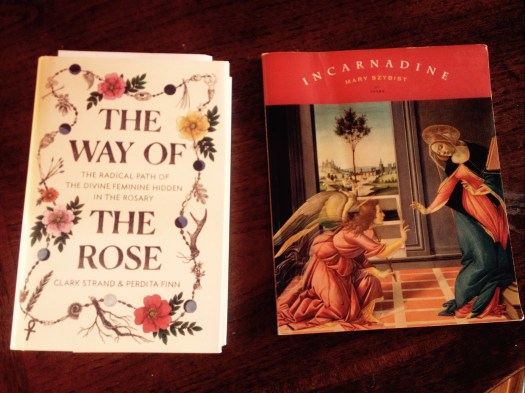
fullsizerender-15.jpg

And here’s the one I couldn’t resist at all, holy intentions or not:
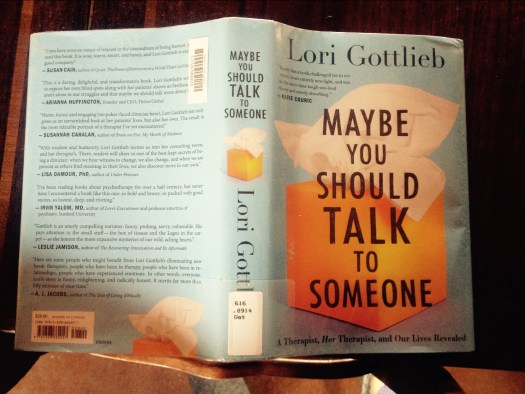
FullSizeRender (14)

What are you reading? I’ll put your recommendations on hold at the library…in January!!


High Desert Harvest

Have you met my book of poems? Allow me to introduce Refugia.

fullsizerender-10.jpg

Refugia’s poems grew out of this high desert landscape as surely as any juniper berry or cholla fruit.

They track inner tides of belief and doubt, and move in and out of the kitchen, dreamtime, and wild places. They witness the growing up of children alongside the decline of western conifers. They hold love, beauty, and despair in equal parts.

The title (pronounced ref-you-jee-a) refers to places where plant and animal species can survive periods of unfavorable conditions and climatic shifts. It is a concept that fired my imagination and offered a glimpse of ways in which something might survive from the landscape I love and which is changing before my eyes. The strand of “yes, and” that refugia offered was one I took up and began following in my poems.

IMG_0945.JPG

In some poems, I turn to my ancestors, who, like most ancestors, know something about surviving loss. In others I turn to the future, leaving my testimony to whoever it is that comes after us, or maybe, as one reviewer put it to “the future self in each of us, reader and writer alike, who is afraid to come into being and grow at a time of such apocalyptic devastation.”

The back jacket calls me a “a bright and hopeful voice in the current conversation about climate change.” I don’t know if I agree, unless by bright and hopeful we mean raw and heartbroken. For me, hope is mostly an act of unwavering love for the land, and for those who came before us and will come after. Not succumbing to despair is the best way I know to honor their lives.

That, and writing poems to feed them with. 

FullSizeRender (11).jpg

And so, introductions made, I invite you to feed yourself and your loved ones with these poems. Refugia is a great holiday gift–worth the price for the cover alone, not to mention the worlds within worlds that await you inside.

Learn more about it and read nice things folks have said here. Order a copy from your favorite bookseller, Indiebound, or directly from me. For a $20 check I’ll send an inscribed, signed, & wrapped copy wherever you like.


November Lights

IMG_0885

IMG_0888

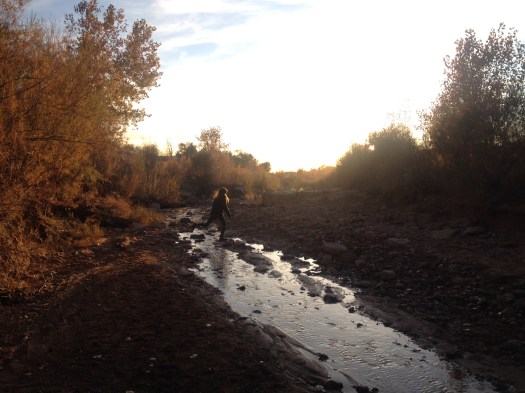
Savoring the late light and the last trickles of river.

Savoring the child.

Savoring the music made early in the morning, in the rush before school. All those lovely notes that are so hard won.

Savoring the flicker of home-dipped candles burning on the altar. Almost out, and the dark nights are just setting in…

…though they say these glowing trees are a lantern to see November by.

Savoring the community that comes out for poetry, the book store that hosts it, the poets that make it.

Savoring these words by Mary Cisper: “Since each occasion is contained in every other, how is this not an orchard?”

How indeed?


Gold Threaded Days

fullsizeoutput_208c

Gold, gold, gold. Gold coin, gold stream, gold forest.

fullsizeoutput_2095

Golden autumn light, golden-hearted kin. Golden ground, golden memories.

fullsizeoutput_2094

Golden days. Years and years of them.

Do you know how many times I had to strike “gold” from my book? My pages were as littered in it as the aspen forest in October.

I changed a few of them, anyways. What other word comes close? I miss each one, just like I will miss this golden season come winter, and this golden life when it’s done.

In Which We Occasionally Find Our Way

IMG_5114IMG_5112

Occasionally it feels like we’ve found our autumn rhythm, each morning creeping chillier and chillier towards dawn, the first golden leaves on the cottonwoods, the river suddenly dry after a six month season of trickling through the willows.  Occasionally it seems like we are in balance–a dinner planned more than 1/2 an hour before mealtime, the fruit tidily preserved in jars or the freezer and no longer swarmed in fruit flies on the porch, the homework done in time, the instruments practiced, the press release mailed. We make it to the mountains, barely. We make it to bed and dream what dreams we can before the next morning arrives, a sliver more darkness edging the new day.

Extraordinary things happen: A book release at the bookstore with a crowd that laughs and cries in all the right places, that celebrate with me the triumph of having translated the inner world to the page, to poetry. Unexpected things take place, like a correspondence with college students in Los Angeles studying Refugia followed with a video conversation that leaves me stunned at the wisdom and compassion of young poets, of young people. How fortunate I am to have such readers as these. They ask me about the making of poems, but also about hope, and about making art when the world seems to be ending. They ask about the ways in which generations merge–mother into daughter into grandmother. They ask about the proximity of beauty to death, and about how landscape informs language, creates meaning. They want to know about vulnerability. I have a great deal to say in reply.

I think about those questions, which are slight variations of the same ones I am always asking. I hold them lightly, but don’t let go. They swirl around inside me, make their way onto the page. Now and then, a poem happens. Not a lot has changed, really. I’m folding the laundry, jogging down the dry river trail, sweeping the floor. A couple mornings each week I drive in the darkness to the hospital to nurse those who are unwell. I light the candle, occasionally, at the dinner table. I say my silent prayers.

Harvest Day

IMG_6652

IMG_6681

And just like that, my book arrives on harvest day.

IMG_6641IMG_6623

Welcome to the world, dear book.

Dear house where voice takes flight, dear river that swept me away, dear guide to the unknown.

Welcome to the world, dear poems in the original unspoken.

Welcome, welcome, welcome.

And don’t forget, my friends: To make the best applesauce, all you need are the best apples.

IMG_6661

Photos by @seedsandstones aka Erin O’Neill

Alone Under the Apple Tree

FullSizeRender (6)

Summer unwinds us to the day my family returns to school. Is that…could it be… quiet I hear?

After a long, fallow summer, my notebooks arrive back on the table. The blank pages are ready for whatever comes next and I hope I am, too. CD Wright: Every year, the poem I most want to write, the poem that would in effect allow me to stop writing , changes shapes, changes directions.  

In other news, I was on local radio and had a lot of fun finding words for what I can hardly speak about: my full-term-about-to-be-born book. Lynn Cline and I had a rich conversation about imagination and the Anthropocene, about fruit years, about belonging, about ancestors and the unborn ones who will come next.

You may listen here, if you like.

If you listen to the podcast while exercising to a muted youtube workout under your apple tree, you’d be a lot like me. Though of course I’m listening to others, not myself.  Obviously, right?


Paying Respect

Toni Morrison

February 18, 1931 – August 5, 2019

No-Place-for-Self-Pity-No-Room-for-Fear

Last week was luminous in the way the world becomes after a beloved sage passes away and their essence dissolves, expands, and is taken up by the grieving collective. My feeds became a space flooded with brilliance as the words of Toni Morrison filled almost every post.  Homage after homage honored her prophetic voice and legacy. She changed the world with her imagination, enacting a ritual of reckoning and healing that will be rippling out for generations.
*
Those ripples are already moving in wide circles, most especially through the poetry community. It is wonderful to witness this moment in poetry, when the collective imagination is so fecund, so necessary, and so very, very well written.
*
This month I’ve been buried between the covers of these books. Each one fills me with wonder and admiration.
fullsizeoutput_1f0b
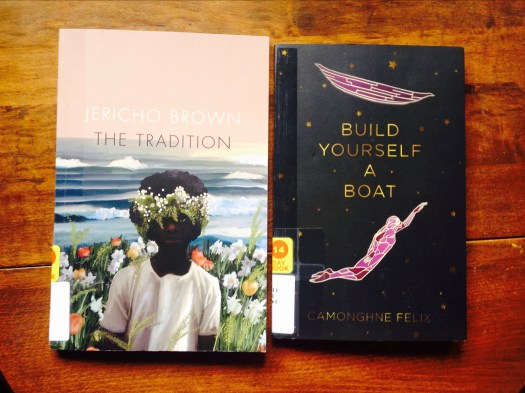
  • Jericho Brown’s The Tradition & Camonghne Felix’s Build Yourself a Boat vying for most gorgeous cover ever. Hot on the inside, too. I won’t give anything away except to say that the second I finished each of these I flipped back to the first page to start over again.
FullSizeRender (4)

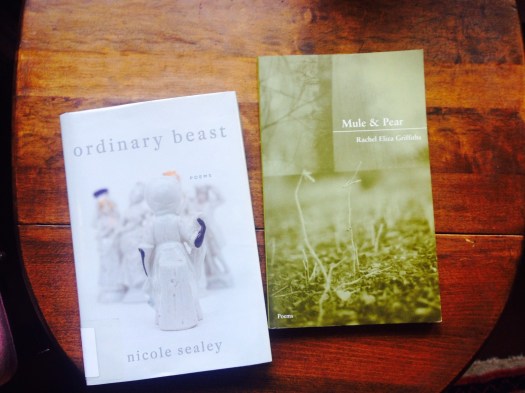
Nicole Sealey’s exquisite Ordinary Beast. Sealey is the mistress of craft.

*

Rachel Eliza Griffiths’ Mule & Pear. The poems in this collection are an incredible tribute to Black women writers –and their characters–across the last century. I turned to it immediately after hearing of Morrison’s death for a reminder of how stories sing across time and through dimensions.

FullSizeRender (5)

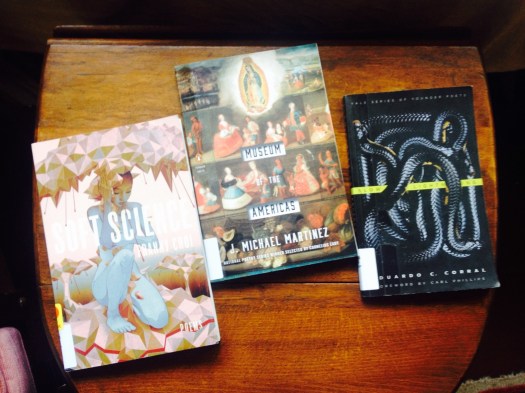
Soft Science by Franny Choi is elegant and devastating and dazzlingly inventive.

*

 Museum of the Americas by J. Michael Martinez and Slow Lightning by Eduardo C. Corral are books I often return to, for both the writing and unparalleled vision of the border.

*
In their own crystalline way, each of these writers honors Toni Morrison’s famous words:
“This is precisely the time when artists go to work. There is no time for despair, no place for self-pity, no need for silence, no room for fear. We speak, we write, we do language. That is how civilizations heal.
*
I know the world is bruised and bleeding, and though it is important not to ignore its pain, it is also critical to refuse to succumb to its malevolence. Like failure, chaos contains information that can lead to knowledge–even wisdom. Like art.”
~~~
PS, Can you stand how on point the poetry section at Santa Fe Public Library is? 

Between Lightning Bolts

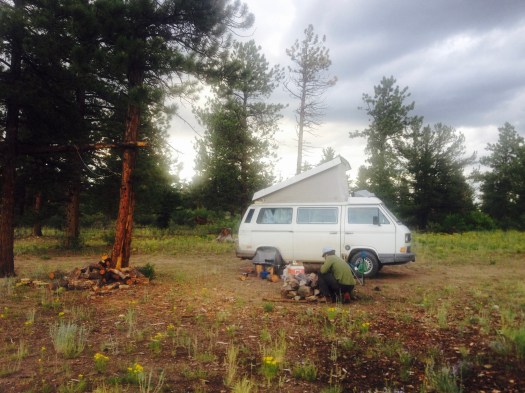
fullsizeoutput_1f18One thing I noticed on this year’s pilgrimage to the Colorado wildflowers was that there are places that have been found by the masses, and places that haven’t. That goes for mosquitoes as much as yuppies.
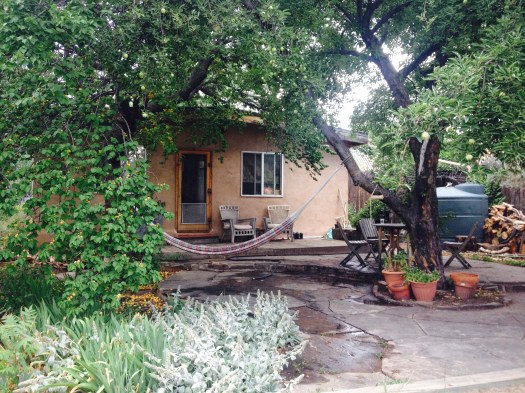
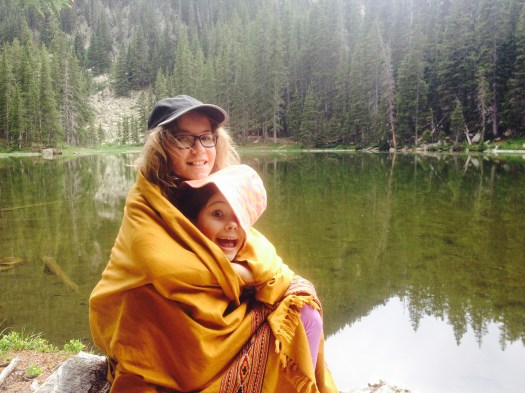
On this lonesome ponderosa-clad mesa, mountains rolled like green waves around us, rippling out in every direction. Thunder commenced cracking at midnight, and lightning strobed as it must have done on the very night of creation.

We crowded together on the bottom bunk, counting seconds between flashes of light and its answering sound. There is a fruitfulness to silence and the unspoken. I love quiet, unfilled places. I can’t help but notice that in the long absence I took from writing online, a book was born, emerging out of rich, internal soil.

The internet is a little like Colorado. Some parts of it are really noisy. That is probably where my publisher prefers me to be, but I am choosing this backcountry blog as my online home. It is the space where I own (to whatever extent that means on the internet) my own thoughts and images, and where I am unconcerned about likes and followers. I’m not done telling the story I first started spinning a decade ago when I first started writing Old Recipe for a New World, and I want to do it here, away from the crowds.

fullsizeoutput_1ea2

We are home now. Fruit hangs heavy on the trees. The last weeks of summer stretch hot and welcome before us. I’ll be here, waiting for the next storm. How I love the hour after a good monsoon–the rain soaked desert, the dissipating ozone from lightning strikes that leave fertile ground in their wake.


Midsummer Revival

fullsizeoutput_1e1efullsizeoutput_1e2dfullsizeoutput_1e37fullsizeoutput_1e2bfullsizeoutput_1e31

Mountain season, lake season, birthday season, river season, monsoon season, Volkswagen season. Season of things sprouting up like squash leaves in the compost, with ideas, dreams, & seeds from the long ago circling back on themselves, re-emerging.

It is amazing what emerges out of long silence. I have new stories to tell, though they are not so unlike the old ones. I have a book soon to arrive in the world, children still unfolding into their fullness, and an imagination still preoccupied with how it is one should live in this world. Perhaps it’s time to re-claim this space in the online wilderness, now so delightfully out of date.

Let’s be old fashioned together, shall we?