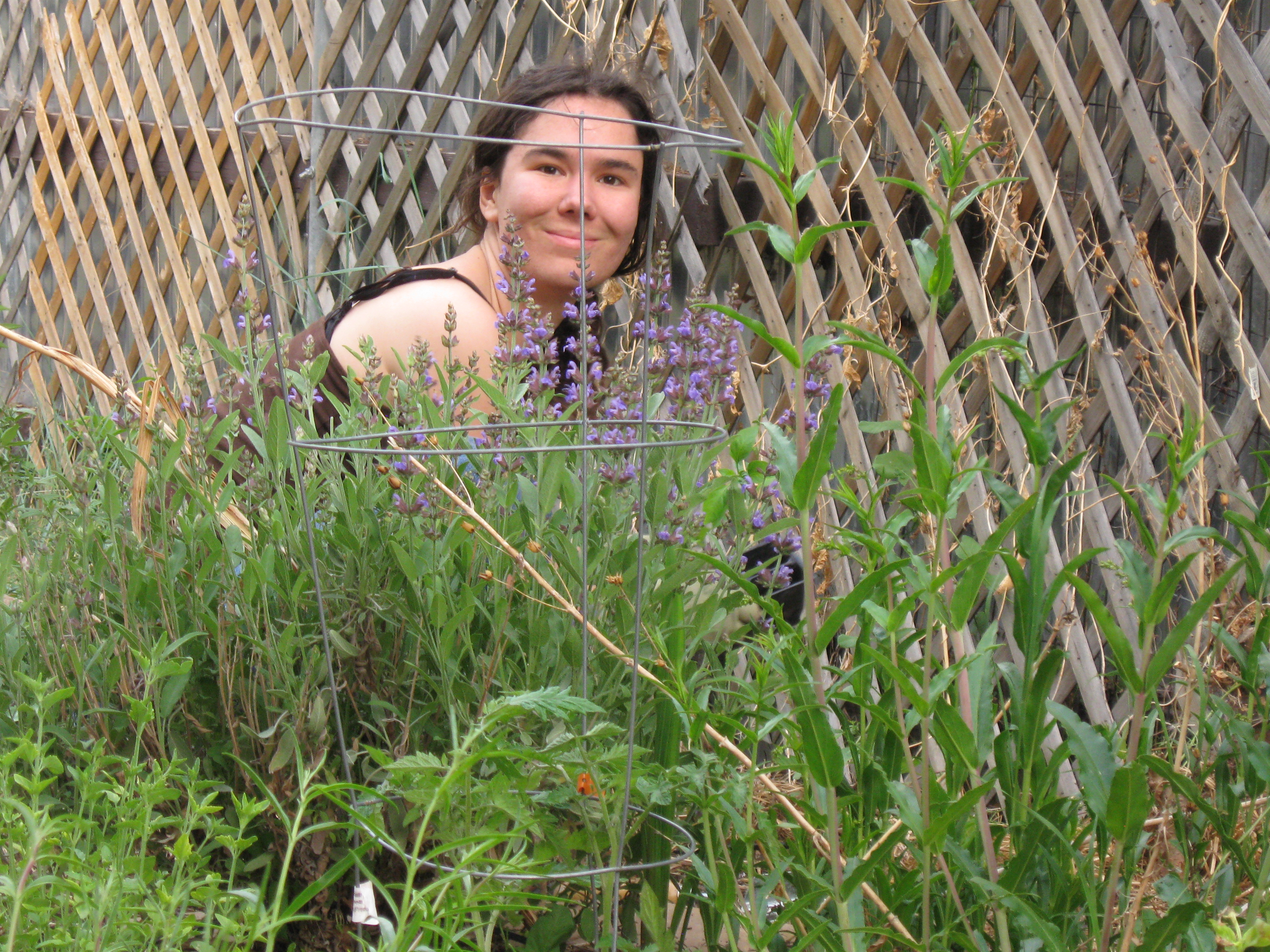
Self Portrait with 1/3 Planted Garden

My notebook and conversations are filled with thoughts and reflections on this third month plastic free. I’ve got this and that to report, mostly about how we fell off the wagon here and there. Nothing serious, just my grappling with the unfamiliar rigidity this experiment brings to life. And an occasional bout of outright rebellion.

But more on all that later.

For now, this is what I’m up to.

::

ps, I hope you are mulling over your post for my April garden/blog party!

A little more wood grain


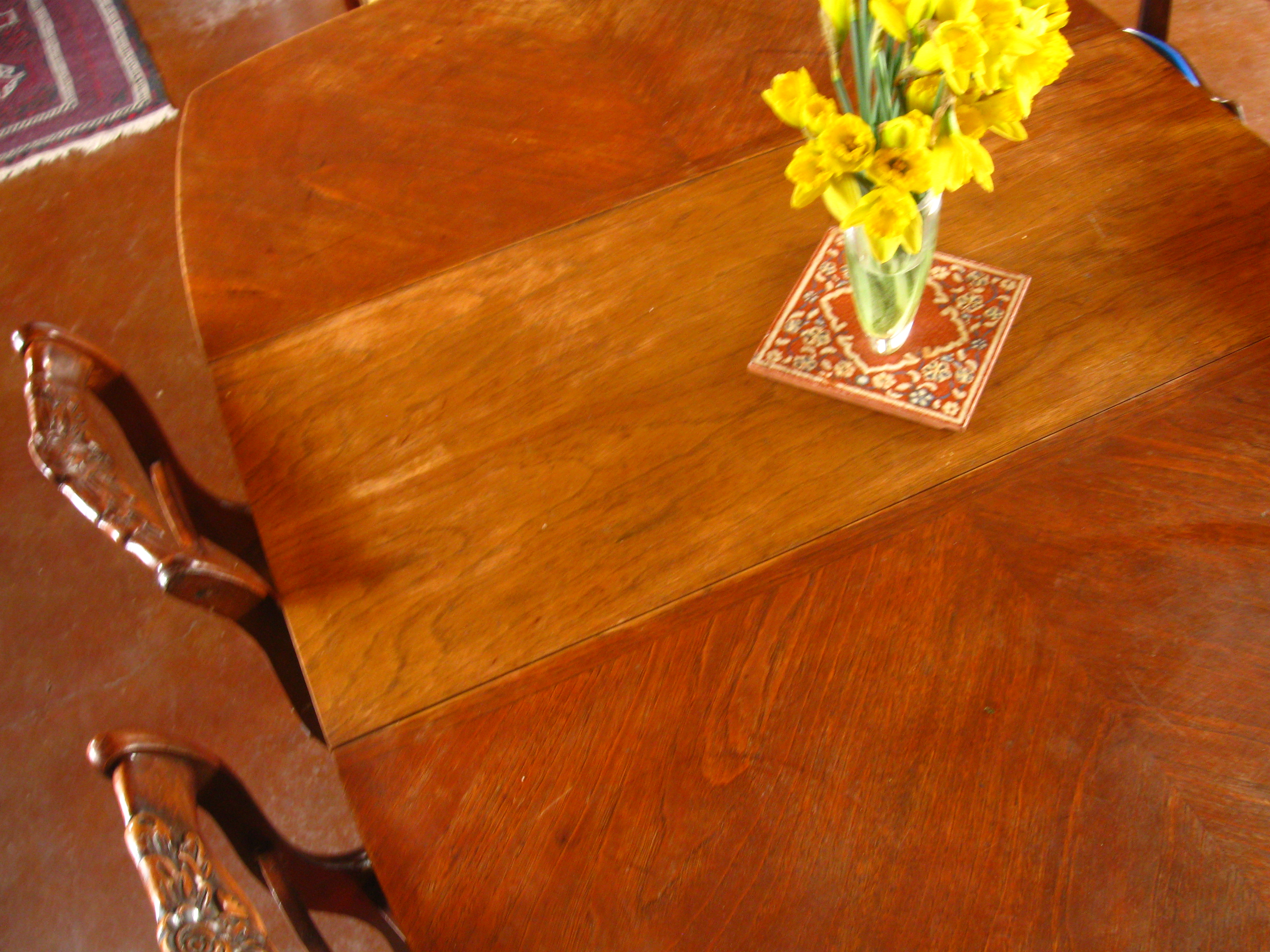
Remember my oil cloth? It’s adorned this table for some ten years, mostly because I was convinced the table was damaged beyond presentability on its inner panels. Then one day last week, I lifted the oil cloth and looked again. I got out the steel wool, and now find myself with a whole new table. We’ll bring the oil cloth out for any projects that involve dough and rolling pins. But for now I’m just enjoying the spaciousness left in its rather bright and busy wake.

And savoring the perfect balance between letting old things go and making do with what we have at the same time.

I feel so…grown up.

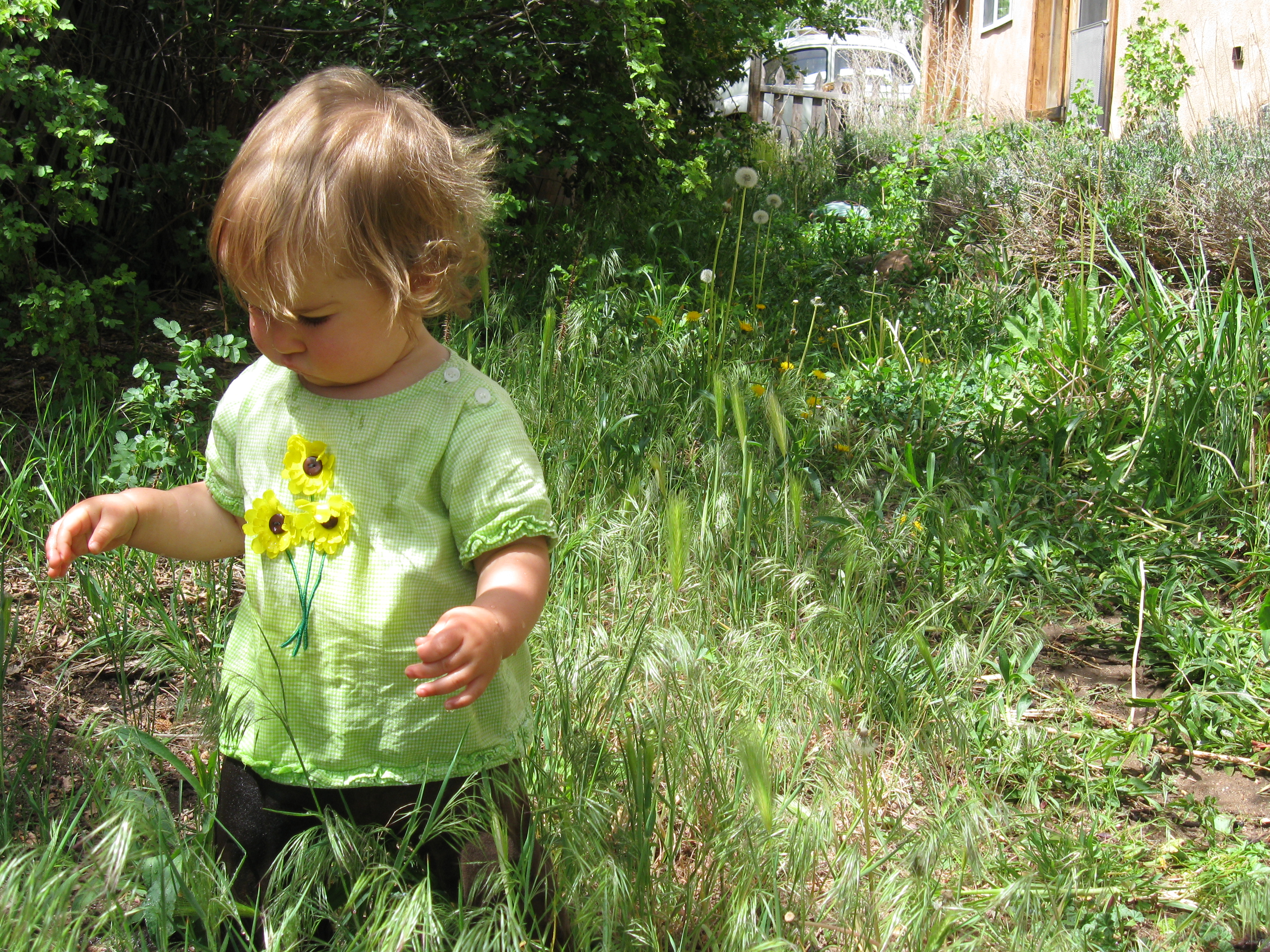
Just like that music-making little lady up top there, I imagine.

Earth Hour–Tonight!

I was just reminded that tonight’s the night to celebrate earth hour. Starting at 8:30 pm your local time.

It’s a symbolic act, undertaken with a global community.

Turn your lights out to join folks all over the world in sending a message about climate change.

And to enjoy the nearing-full moon light.

Cora Love

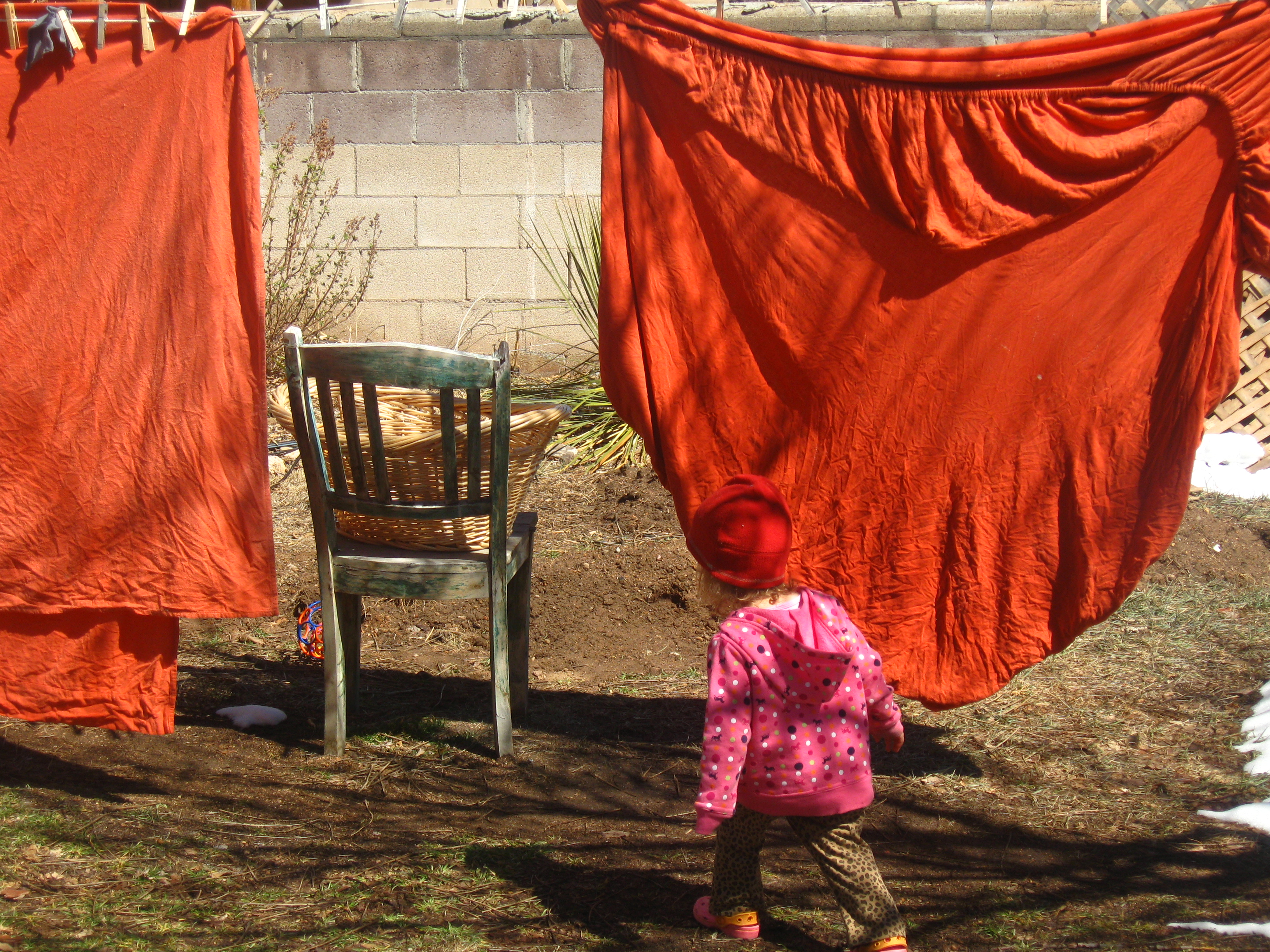
We’re celebrating Cora this weekend–she turns Two on Friday.

Today we had a small party with our dearest Mamas and Littles. Celebrating the arrival of spring as well as little Cora.

~We sang and circled and danced and spun.

~Little bundles of cloth hold calendula and rice grass seeds to spread on the land, that our friends’ lives may be filled with as much beauty as they bring to ours.

~We sort of made a springtime procession a la Mother Earth and Her Children, with daffodil wands and handfuls of rich compost to bless the new green growth we discovered and greeted.

(And then ran all over in a general ruckus of rambunctious fun.)

~The cake is carrot-applesauce from one of the Moosewoods. Cream cheese and maple syrup frosting.

::

Blessings, my daughter, on your next season of growth.

It is a joy to have you at my side.

Every day, every moment; I am so grateful.

Speak Those Good Green Words

Perhaps it helps take my mind of all the plastic wrapped things I’d like to be buying right now–yep, it’s official, I’m having withdrawals–but I seem to be all-garden, all-the-time around here. So believe me when I say I need a little…support. As you know, I’ve been reading all sorts of garden books. I’ve been talking to all sorts of garden people. I’ve been digging beds and sketching possible layouts and sorting through my seeds.  Since I can’t distract myself with plastic pleasures (I know this is dumb, but I’m craving coconut popsicles), I’m just going to indulge this, er, healthy obsession. With a little help from my friends.


You are cordially invited to chime in for a little blog party. A garden blog party. What has your land taught you? (Or the potted aloe plant on the kitchen window sill?) Tell us about your method and philosophy, your tools, your bounty and losses. Tell of your favorite plants, what you say to weeds, the smell of rain on your soil. Tell us of the wild land you roam and how it strengthens the plot you cultivate and your own growing body. Tell us what your garden would say if it could speak, what it has whispered to you when you weren’t listening, but heard anyways. Speak practically or poetically. Whether you cultivate it or not, whether you have “success” with those efforts or not, whether you consider yourself obsessed with green growing things or utterly indifferent, I’d like to know what you’ve learned from your home-ground.

To participate, write your post anytime in the next few weeks. Link back to me or leave a comment with a link. By mid-April I’ll compile all the posts into one “annotated” guide, and we can all swoon over each others turf, and be reminded of the goodness of our own. If you’re not a blogger (what! some of you haven’t started your own blogs yet?) leave a comment of as long and descriptive a nature as you like, and I’ll incorporate the text into another post. Tell your friends. Let’s all speak our good green words in one joyful breath.

These Days

I have a guest post over at the One Small Change blog. They’re the good people who have created a bit of a phenomenon of environmental changes–small and large–in the blogosphere and beyond. My post is called A Plastic Free Primer.

In the meantime, the river’s a-running and my little bug turns two this week.

Every so often I think about how to create a simple, sweet, and plastic free party for her. But mostly we’re just digging in the garden.

Garden Books Galore

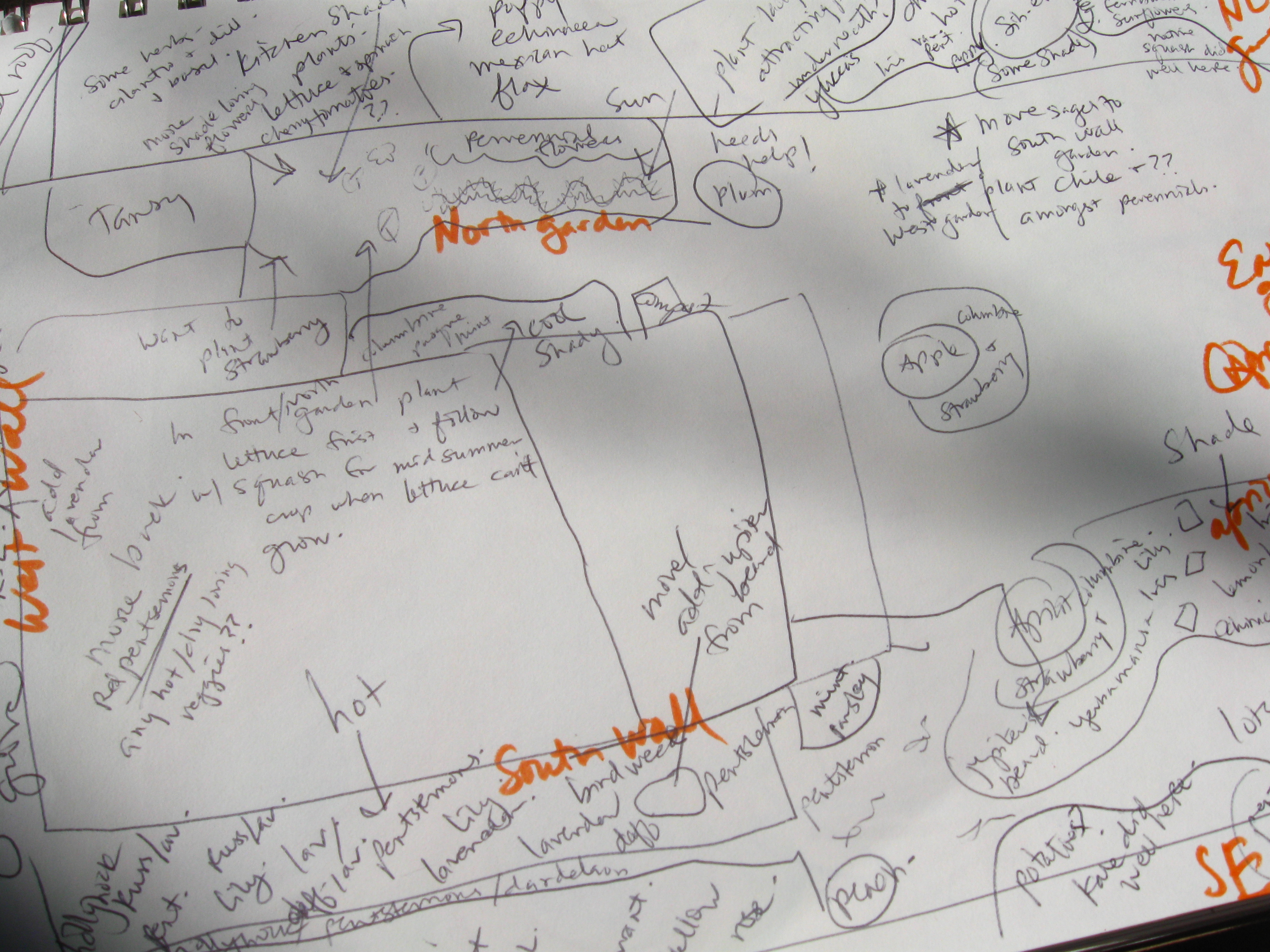
Annotated map of our yard.

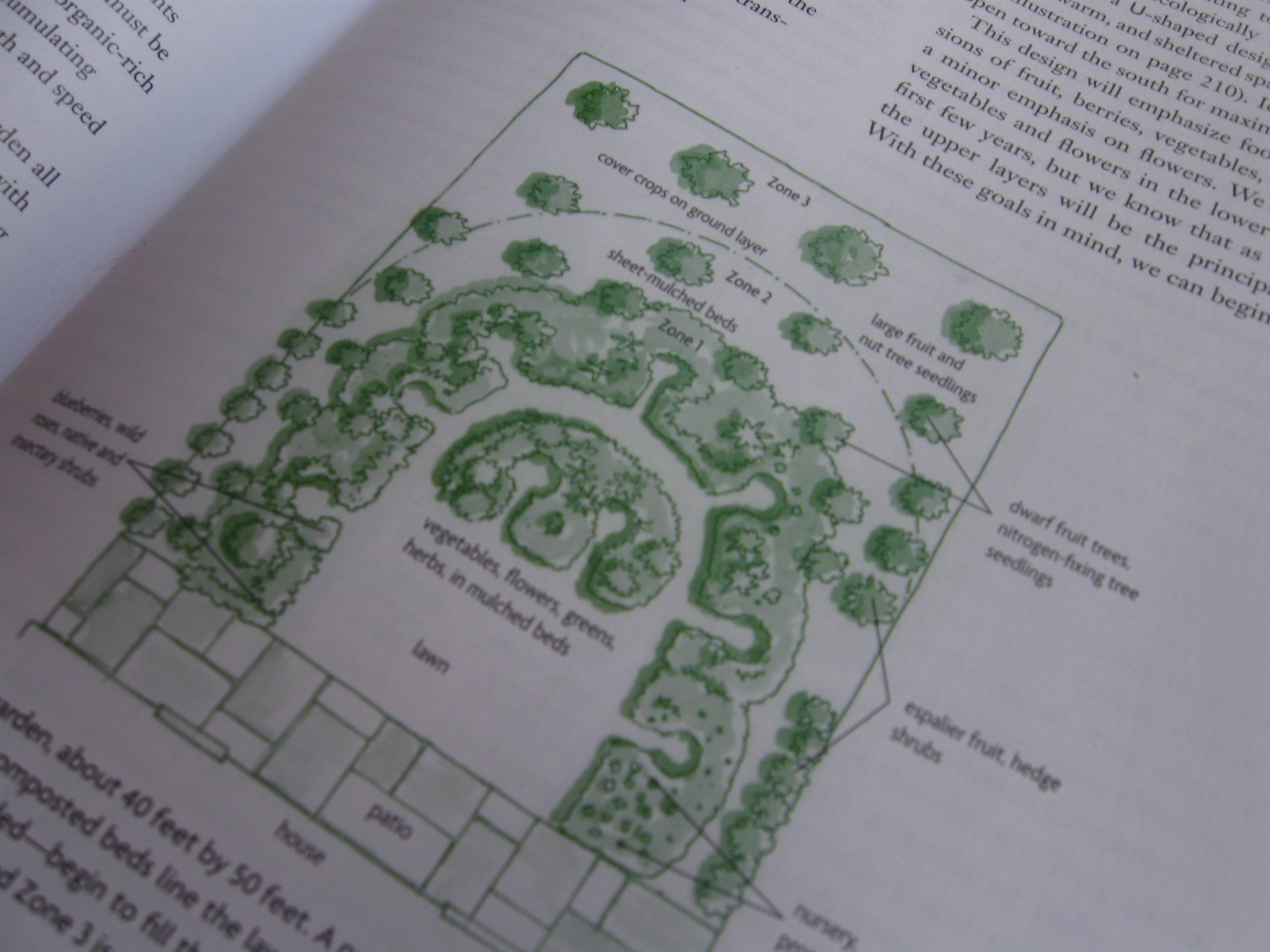
Detail of keyhole beds from Gaia’s Garden.

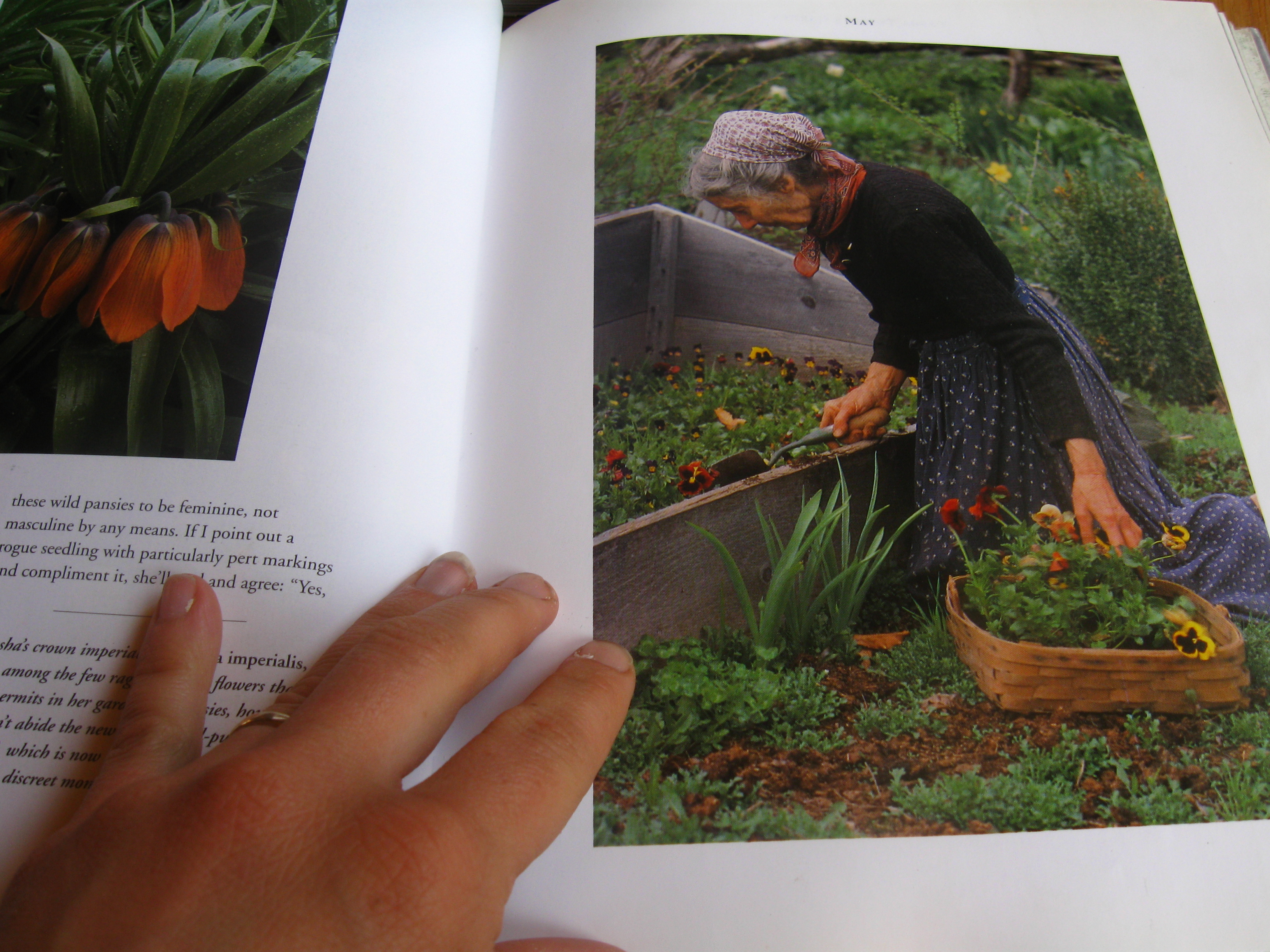
Tasha Tudor Reminding me that skirts and dirt go well together.

The stacks of our public library yielded this inspiration:

Gaia’s Garden: A Guide to Home-Scale Permaculture by Toby Hemenway is the best home permaculture book I’ve found. Hemenway carefully builds a framework (or should that be layers a sheet mulch?) of how to understand and create an “ecological garden.” Why to mix perennials and annuals, how to layer plants, the importance of building soil, the role of observation in the garden, and so much more. This is one of the best gardening book’s I’ve ever read.

Gardening at the Dragon’s Gate: At Work in the Wild and Cultivated World by Wendy Johnson is, simply, beautiful. For decades Johnson has tended the gardens at the Green Gulch Farm Zen Center in Marin County, California. Her writing is as skilled and mindful as the gardens she describes. One part poetic storytelling of a life of Zen meditation and turning dirt, one part highly thoughtful and comprehensive narrative of gardening lore. Anyone who likes to think about plants, gardens, meditation, compost, koans, and their kin will love this book. Even if you just love one of those things, Wendy Johnson will make you swoon for all the rest.

The Sweet Breathing of Plants: Women Writing the Green World edited by Linda Hogan and Brenda Peterson isn’t a gardening book. It is a book about connection and relationship between women and plants, and ranges from the garden to the wilds, touching upon every aspect of green growing things. It includes essays and poems and stories by many writers you already love and others you will come to love, including Zora Neale Hurston, Isabel Allende, Alice Walker, Rachel Carson, and dozens of others. This book is an inspiration that will have you humming with appreciation for your particular plot of earth, the larger homeground beyond it, and the green tribes that fill your life. I revisit this book every year.

When I delve into a subject, I go full bore (a remnant of my interest-led unschooling years, perhaps?) I absolutely inhale everything I can get on the topic, applying it as I go and eventually moving on, a bit wiser for my efforts. A few other gardening books on hold for me at the library, or ordered through interlibrary loan:

How to Grow More Vegetables… by John Jeavons. A classic of bio-intensive gardening that everyone else seems to refer to.

Designing and Maintaining Your Edible Landscape Naturally by Robert Kourik

The One-Straw Revolution by Masanobu Fukuoka

Gardening for the Future of the Earth by Howard Yana Shapiro and John Harrison

Stolen Harvest by Vandana Shiva

Seed to Seed by Suzanne Ashworth

The Unsettling of America by Wendell Berry

Four Season Harvest by Elliot Coleman

I told you, I’m voracious. Probably won’t get all the way through this list before the actual work of gardening takes hold of me and I turn to the plants and soil to teach me all I need to know. But I might get close. And there’s always next year. For now, I’ll plant the fertile beds of my imagination for whatever harvest lies ahead.

p.s. what are your favorite books?

Holding, Waiting, Dreaming

Here’s the day bright and warm.

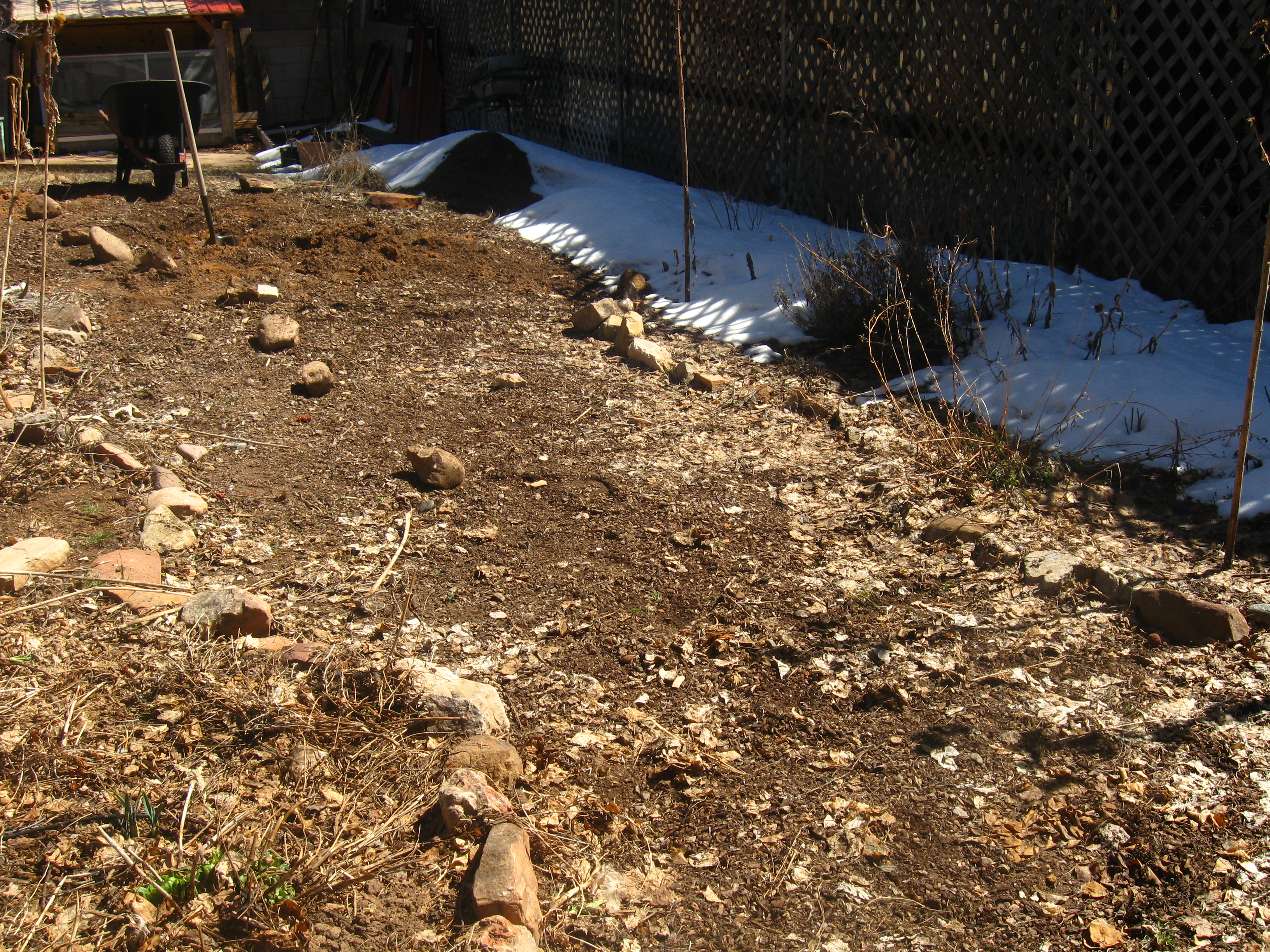
Look carefully and you can see the piles of dirt I meticulously double dug in a burst of “must grow all our own food this summer.” When my wise garden advisor came to weigh in, she nudged me back towards the center of our yard. “See how wide these paths are?” she asked. “Grow food in them.”

Aahhh. I see.

Stay small, work slowly outward, build soil. Listen to this little piece of land, rather than chattering at it endlessly.

The funny thing about this month’s one small change (my grand plans to start walking everywhere), is that it was just a bit much. I blew out my shoulder hoofing it with Cora on my back (the stroller had a flat and I would not be stopped), and now am relegated to staying home and reading garden books instead of roving all over town and randomly turning up soil in such a way that I succeed only in killing our pobre patch of native grass. Next month’s change was meant to be laying the ground work for growing–you guessed it–a lot more food. Which I’m looking at a little differently now. Taking the long view, you could say. As in, how much of the pathway do I really have the energy to turn into something new?

Despite the fineness of them, these barely-Spring days are not time to leap forward. Just as the apricot knows better than to burst forth just yet, I need to observe a bit more, pull my energy back towards the center. So, maybe this isn’t the year I’ll grow all our own food. Maybe this year I’ll learn something unexpected. Like, what I have is enough.

Oh blessed day, it is enough.

The Best Thing Since…

I’m thinking that whoever decided sliced bread was so great must have sold plastic bags. After all, why else praise an innovation that requires something as basic as bread to be kept in one? A much better thing to celebrate the greatness of, I’ve decided, is the tortilla press.

No, you don’t really need one. My friend makes corn tortillas by pressing them with a pyrex pie pan. But oh, are they heavenly. I’m quite taken with this one that my folks brought me from Mexico. I could have bought one down the road at the Mexican grocery, but am a bit wrapped up in my buy nothing new philosophy, which happily doesn’t exclude gifts.

It’s like magic, this amazing little maquina. Mix dough easy peasy, press the handle, put on the skillet, eat a bit of heaven. I used to think making corn tortillas was a chore. We eat a lot of bean and rice feasts around here, and the taco portion has been conspicuously absent for a while. No longer. Now I’ll make a few tortillas at lunchtime (without complaining!) and even in the morning when making E’s lunch. I will say that when I tried to make wheat tortillas with the press it didn’t work too well, and that I was a bit relieved that I still have good reason to wield my rolling pin regularly. Also, I should mention that tortilla presses come with a piece of plastic sheeting to press the dough between, so that it doesn’t stick to the press. At first I was opposed to using it, and used parchment paper instead. That worked fine, but isn’t as reusable or durable as the plastic, so I’m surrendering to the wisdom of countless Grandmother’s south of the border and just loving it instead of fighting it.

So I ask you, what’s your favorite device that brings a bit of ease and perfection to an otherwise handmade endeavor? This week, see if you can’t slip into casual conversation something like, “Oh wow, that’s the best thing since____(the food mill, apple slicer, etc) was invented.”

Waste Free Homeopathy

Part One in a Series on Waste Free Home Remedies*

We’ve had our share of routine winter ailments this winter, and relied heavily on the homeopathic remedies that always seem to help us through the rough patches of croup, snot, sore throats, etc. I was raised by a classical homeopath, but it wasn’t until being pregnant and tending a newborn that homeopathic remedies became my first response to acute ailments. I’m much more of a plant person–I love my  “mother tinctures” and assure you there’ll be much to say about the Green Allies soon enough. For now I just want to share what we do when our little bottles of potentized sugar balls run low.

When I left home, my mother, the homeopath, made sure I had one of these little remedy kits. Just in case of…almost anything. Some of these remedies I’ve never even opened, while others have been used a time or two, and still others get used up frequently. You never know what you’ll need, and it’s handy to be ready for the strange bout of stomach flu at midnight or the high fever or the wasp sting. If you are a regular user of homeopathics, a kit is a wise investment. For some it is simpler to just buy the needed remedies when they are called for–they are readily available these days (but often, you may have noticed, in plastic bottles) and inexpensive. Still, if you go through the remedies that work for you and your loved ones as quickly as we do, you might wonder if there is a way to refill the bottle rather than just tossing it and purchasing a new one. Indeed there is.

You see, homeopathic remedies are a bit like a sourdough culture or vinegar. Except they don’t smell. They have an essence that doesn’t go away, and can be transferred to new sugar balls, which are the carrier for the actual remedy. There are remedies (it is said) that have existed since the 1800s. Maybe even earlier. By adding to your medicine chest a bottle of “blanks” (plain sucrose pellets that can be purchased from homeopathic pharmacies) and a bit of grain alcohol, you are well on your way to keeping your family’s kit alive and well for a few more generations. Because the remedies were originally made using a dilution method and are composed of energy, one more dilution will not weaken them. Nor will it increase or alter the potency in any way. Note: this can only be done with remedies that are 12c or stronger (30c, 200c, etc.). It will not work with lower potency remedies (6c and 6x) because they contain material substance and aren’t pure energy.

The process of transferring a remedy to blank pellets is called “grafting.” Here’s how it’s done: when your bottle of Pulsatilla or Belladonna or whatever it is you use most is about 3/4 empty, put in one or two drops of grain alcohol to wet the remaining balls. The alcohol is a carrier for the remedy, and will transfer it to the blank balls. Refill the bottle from your supply of blank sucrose pellets, leaving a bit of head room at the top. It’s okay if the new pellets are a different size than the old ones. Be careful not to let the blank supply bottle touch the remedy vial. A small envelope or piece of folded paper can work as a funnel. The last step is to shake the refilled bottle by hitting it against your palm a dozen times. This ensures that the blank pellets are coated with the remedy, and activates them.

That’s it!

Another useful thing to know–when taking a remedy it’s not necessary to take the pellets directly under your tongue each time a dose is needed. Instead, place a “dose” into a 1/2 cup of water. A sip of this water then becomes a dose, and can be taken as needed. Not only does this  reduce the amount of remedy that gets used up with each round of sickness, it is considered a superior administration method by many homeopaths.

If you have questions or would like to learn more about homeopathy, please visit the FAQ page at my mom’s website, HomeopathiCare, or at the National Center for Homeopathy website. Both of these sites have recommendations on books and can help you find a homeopath to work with personally.

Two companies I recommend for kits, single remedies, and blank sucrose pellets are Washington Homeopathic Products, and Natural Health Supply.

This company sells organic grain alcohol and vodka, which I highly recommend you keep on hand for this purpose but also for making herbal tinctures. But that, my friends, is a post for another day.

::

* I just want to be perfectly clear that medicine should never be avoided because of packaging. If we need it, we get it, plastic fast or not. It is great when we can find alternatives and learn to be self reliant, but sometimes we just need that prescription or over the counter drug or the natural remedy in a little plastic bottle. Please take care of yourself and your loved ones as best you can, with whatever means are necessary. Wishing you much health!