Sour Cream

First things first: I’ve sworn off strawberries except as a very occasional indulgence–until, of course, they come into season here and I do whatever it takes to (non-violently) fill my freezer. Certainly if we have trouble waiting for their season to come, there are plenty of other “exotic” California fruits that don’t involve a package that will sit in the landfill forever.
Now, sour cream. When we started reducing the amount of plastic we bring into our home, the steep drop-off in trash was more of a bonus than the outright goal. Our intention was really to learn to live in a new way: to make what we needed ourselves, from scratch, and to learn to go without the things we couldn’t make ourselves or obtain in a plastic free way. Sour cream perfectly embodies both of these things.

While I’ve had sour cream starter in my freezer since New Years, I didn’t start making it until, oh, a few weeks ago. I don’t know why, but we went without it for months. This was not easy for us. We talked about it over our bowls of beans and chile, tried to remember the taste of it, the texture, the tang. Perhaps on some level I didn’t think it would work, that it was going to prove beyond my ability to make it. And I hate failure. But what else could you call a life without sour cream?

Finally I bought the cream, a whole quart of it–which amounts to a small fortune in glass bottled milk. When time came to add the culture I saw I was supposed to use light cream or half and half. Even skim milk. Skim milk! So I made pies and quiches and used up the heavy cream, bought half and half, and finally, finally, around The Man of the Place’s birthday, made the dang sour cream.

And my life is forever changed. I am a new woman. Maybe even a real woman. To think, if a few more weeks had gone by, I might never have discovered the simplest, most delicious home-cultured milk product known to housewife’s across Russia and the Ukraine.

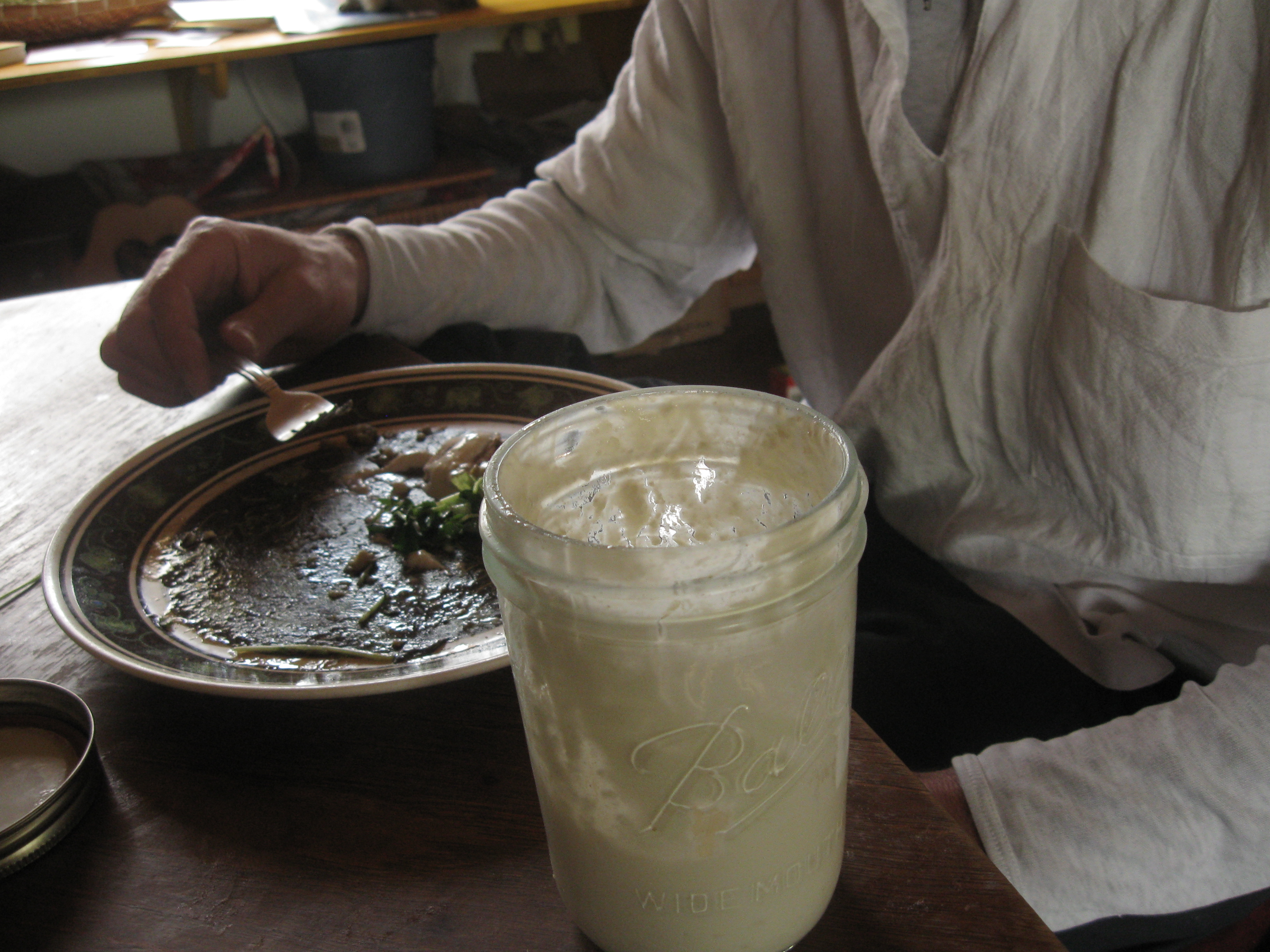
So: Obtain milk product as described above. I started with culture from this company, but have since been using the cream itself to make subsequent batches. It’s alive, like yogurt. I wonder if any commercially available sour creams have a live, active culture. If so, try using a tablespoon or two of those per pint of milky cream. The best part is it’s totally fuss free (unlike yogurt, which has a slightly more tedious but still very simple requirement of heating, cooling, incubating). Warm the milk/cream/whatever to 80 degrees. In case you don’t have a cheese thermometer, this is to where it’s not cold anymore, but well before it gets even luke warm. Mix in your starter. Leave undisturbed at room temperature for 12 hours.

Then eat with a spoon, straight out of the jar.

ps, we’re going to dollop sour cream on our (ahem) rhubarb-apple cobbler this very minute.

Where We’re At

As most of you know, my family just spent four months buying as close to no plastic as we possibly could. Our “experiment” was an extremely successful primer in simple living, one that we continue to be instructed by. We are much changed. So what does life look like now that the rules have been lifted?

Well, I’m still making soft cheeses like chevre and ricotta. I make our yogurt and sour cream. I’ve started buying hard cheeses like jack and cheddar from a local source. Yes, it’s packaged in plastic. But it’s organic and local, and while I might have avoided personally creating trash when I bought cheese from the grocery deli in my own container, I noticed they wrapped the (non-local, non-organic) cheese right back up in a fresh piece of plastic wrap after serving me. So that’s one change.

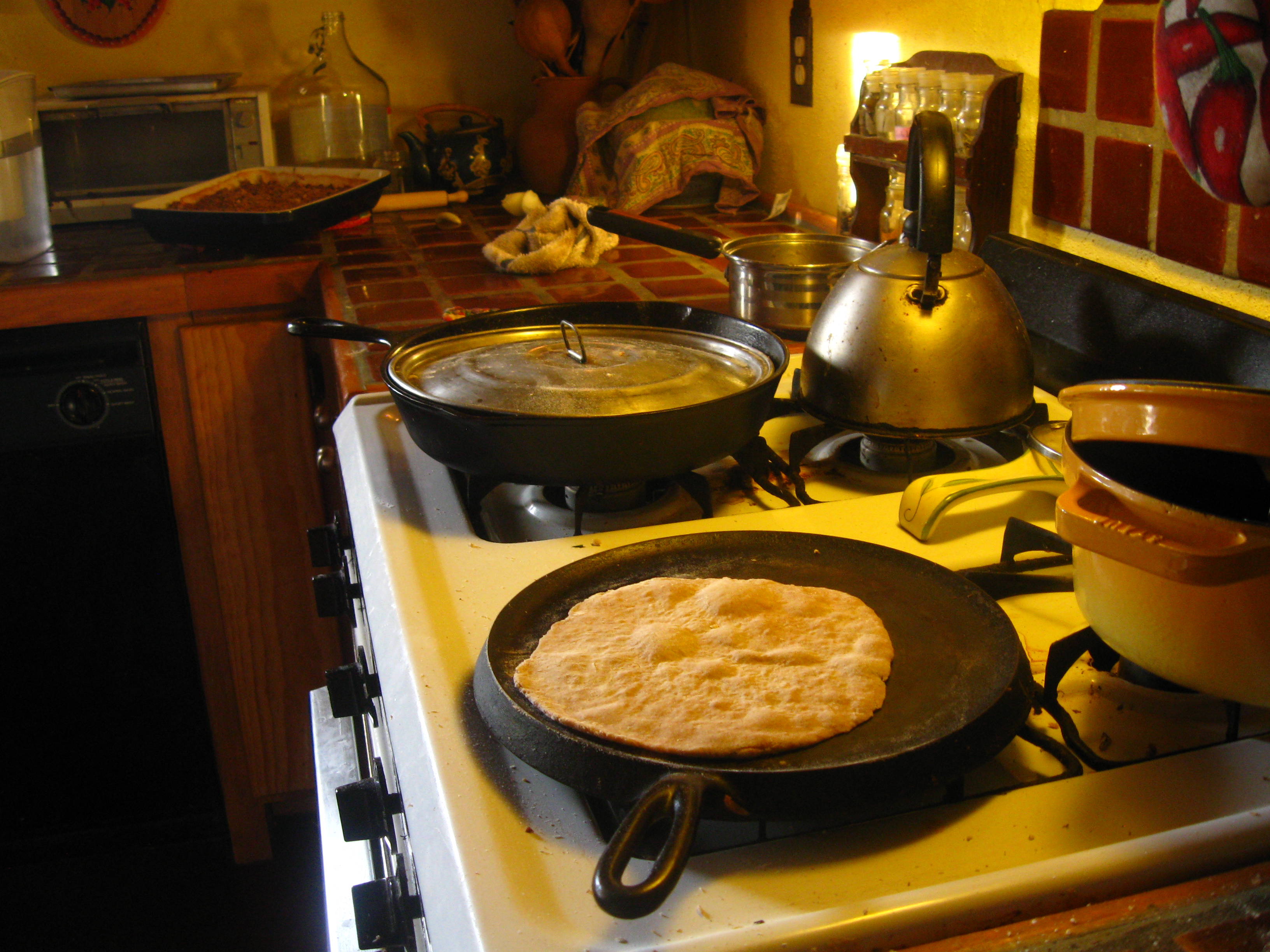
I’m still making our tortillas, bread products, and crackers. I did buy a can of tomatoes, which is lined in a BPA containing plastic. My first canned product in ages. It felt…kind of sinful and unnecessary, but also kind of wonderful. Oh, and we’ve been having a bit of a strawberry  feast for the last couple weeks. Just couldn’t wait for their local season after so long eating home preserved apples all winter. They are wonderful, and I vacillate between disgust at the plastic cartons piling up in our normally empty trash and pleasure in my daughter’s pleasure. Hopefully she’ll get sick of them soon.

Some folks might wonder, why not keep going the way we have been? For us, that’s not an option. We have cars to maintain, a house to hold together, bodies to nurture, and a growing child to care for. As I’ve learned in the last few months, this requires very, very little plastic. But it does require some, and we’d be lying if we said we didn’t need it. Also, we have a growing commitment to local foods–I want to try to get as much as 4/5ths of our fare from local sources this summer, and sometimes this means choosing plastic packaging over a non local, unpackaged food. I’ve struggled with this for the duration of our fast, but am now ready to switch my priorities just slightly so that local takes precedence.

So, basically we are continuing to implement our new ways of living, and ending the rigidity of the actual fast. In my mind I’ve devised an elaborate flow chart that helps me to decide when a plastic purchase is appropriate.

I ask myself: Do I really need this?

No: Don’t buy it. Yes: Am I sure?

No: Try to go without for awhile. Yes: Is an alternative available?

Yes: Buy the alternative. No: Am I sure?

No: Look around more. Yes: Ask,

Will this help us to live more ecologically overall? How durable is the plastic? How much can it be reused before being thrown away? Can it be found secondhand? Will it bring us joy, encourage creativity, enhance our life in a way that is ultimately responsible?

Things that we’ll probably be buying in the near future are: drip irrigation supplies, glass storage containers with plastic lids, a bottle of oil lamp fuel, fixtures for the gutters we are installing this spring, and key ingredients that help us to cook from scratch and reduce our packaging waste overall. Assuming of course, that these things meet the criteria laid out above (i.e. no alternative available). Still, there are lot’s of things a four month plastic fast won’t give you a chance to run out of–I’m just now starting to wonder about craft paste in a glass jar, and a refillable ink pen. It’s things like this that we’ll continue to investigate and incorporate into our lives.

So the journey continues to discover what we really need, and how we can best acquire it. Thanks for coming along with us.

River Love

What a glorious and busy week it’s been in these parts.

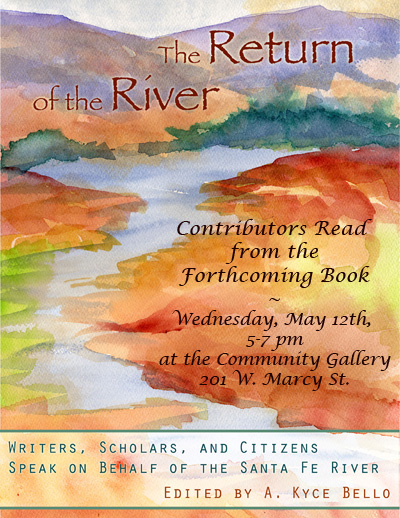
I was consumed with getting ready for this reading featuring fifteen contributors from the book I edited (it’s still forthcoming, but soon, soon).  Yes, before I quit plastic I had a life as a literary activist. (I should put that on my tax forms instead of Extreme Eco Housewife.) The reading was dedicated to honoring a vital but much neglected part of our community: our river which was once named most endangered river in America. We had music, poems, and stories from some of the most talented writers and musicians in town, and a wonderful packed house.

Here I am giving my little speech at the beginning. The reading was in a gallery currently showing an exhibit about the Santa Fe River. Fitting, right? Basically what I said in my talk was this: “Our stories, poetry, songs, and art are a crucial part of breathing life back into the river. I believe this kind of praise and honoring feed it in a vital way, and that they are possibly as essential as water. For a river can flow with water and still be invisible and neglected if it doesn’t live inside us…By re-storying the river we bring it back to life in our hearts and minds, smoothing the way for its physical restoration.”

Have you gifted your river, mountain, forest, shoreline, woodland, canyon with a story-song-picture lately?

On the Land

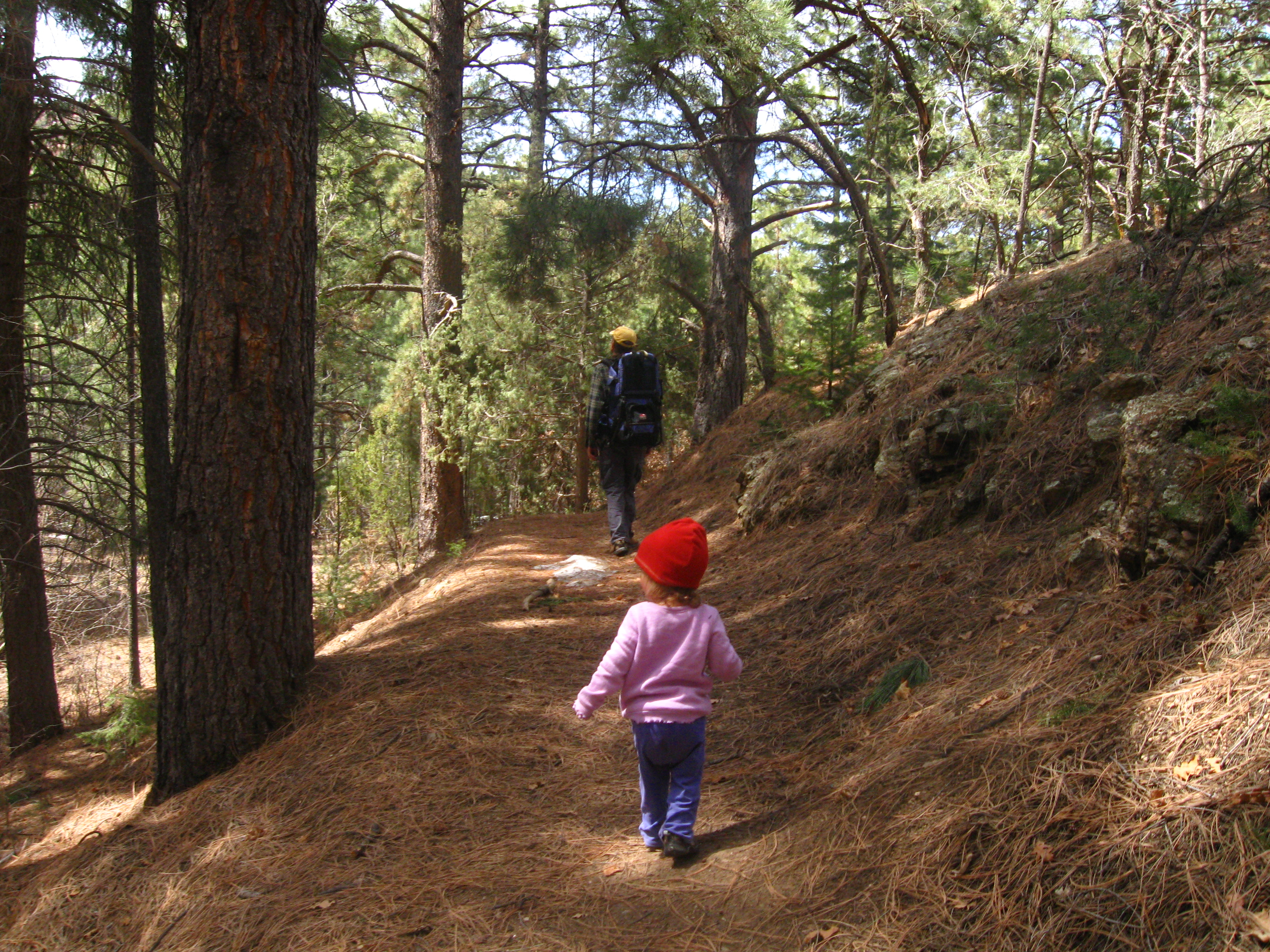
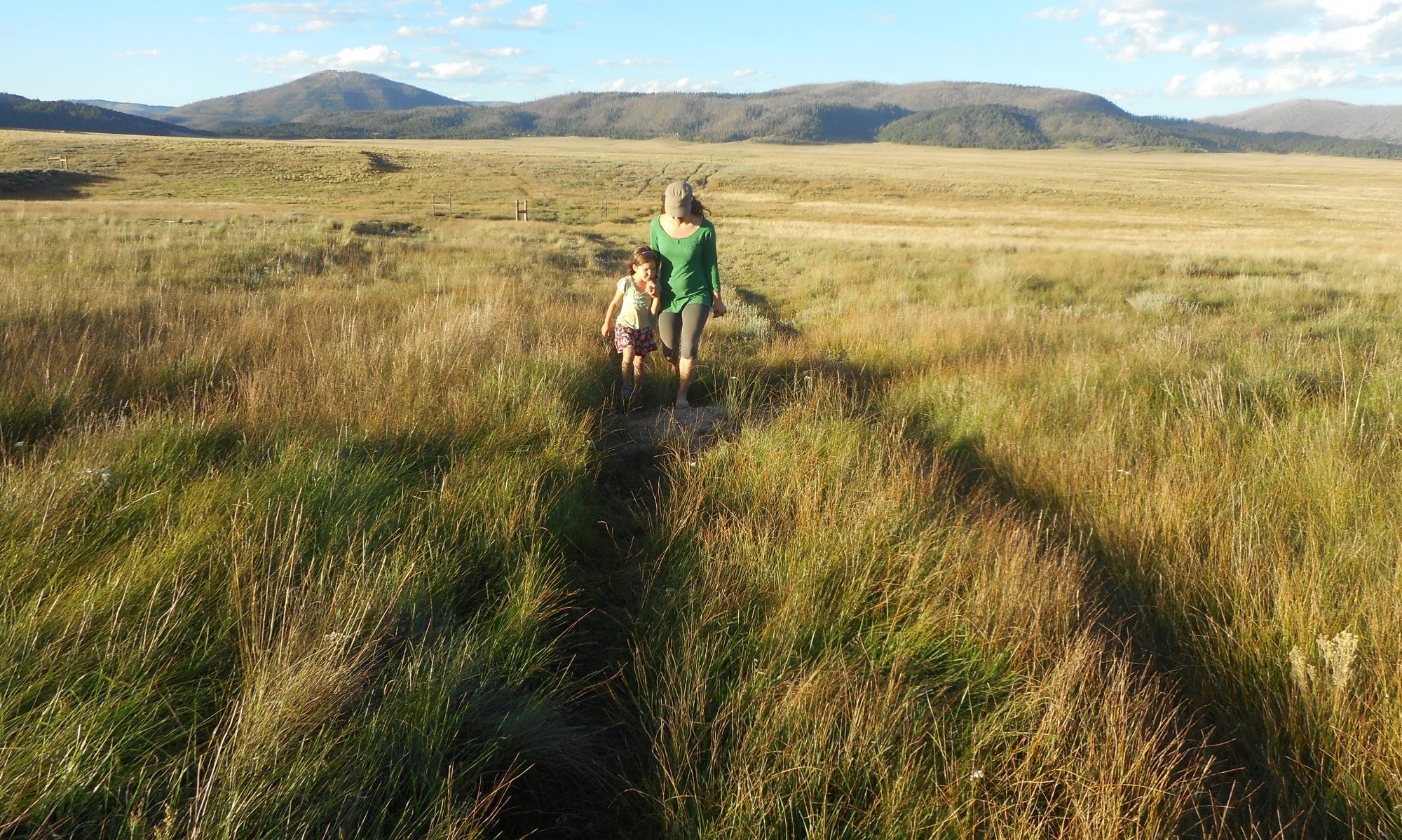
Hiking familiar trails in every season makes me feel most a part of this land.

Sweet smelling, abundant land.

And to see this girl growing and coming to know it, too–oh my.

::

Thanks to the path, thanks to the feet.

Thanks to the many wonders they bring us to meet.

Mourning

Image from this slideshow by the Huffington Post.

Oh mama ocean and all of my kin held in your body,

I am grieving for you. I am angry for you.

Oh mama ocean, oh my brothers and sisters in the sea.

I will find a way to live that honors rather than degrades you.

::

I want to park the car for a week in mourning. But a week, it’s neither enough, nor quite possible.

So I will renew my efforts to live a more radically local life.

Driving seldom, carpooling when traveling across town,

staying home, staying focused on this place,

and the abundance I can find within walking distance.

::

And every day free of driving, be it one or twenty or a hundred,

I’ll dedicate to you.

Oh mama ocean.

My heart is full for you.

April Plastic Tally

It’s that time of month again, when I excavate under my kitchen sink to reveal all the new plastic trash we’ve accumulated in the last month. If you are new here, this is a monthly ritual in which I take account of how much plastic our family of three brought into the home when doing everything in our ability to not bring in any. As I learned pretty early on, we were never able to get it down to zero–plastic lids are acceptable if no alternative is available, and as you’ll see there are other transgressions.

This will be a familiar picture to anyone who’s been around for the tally before. Lot’s of milk bottle caps. A handful of missing rings. (Did I say this was scientific? Not really.)  There are a few extras this month because I wanted to finally make sour cream and had a bit of trial and error buying the right kind of cream. More on that later. The ink pad isn’t trash and hopefully will be around for a while, but it does represent my big, pre-meditated plastic purchase of the month. You’ll also see a lollipop wrapper, a mini yogurt container I needed for starter, a ketchup bottle lid wrapper, the last of my plastic yarn wrappers purchased mail order back in January (I had no idea anyone would think of labeling yarn in plastic!), some random cellophane, and the bag from my vital wheat gluten debacle back in February or so. A sort of sad follow up to that quest for plastic free VWG is that by the time my packaged stash ran out the store that carried it in bulk discontinued it. Yup, that was Whole Foods in case anybody wants to complain. I’d hate them outright, but they also started accepting #5 plastic for recycling. Bring them lot’s of trash, please.


This is the CSA pile. Apple cider, local raw honey, garlic, cheese, and a few bags I couldn’t realistically transfer the contents of to my  cloth bags. The local food arena is one area that I’m going to loosen up about as we enter the Plastic Free Lite phase of our experiment. If something is available locally, but packaged in plastic, I might choose it over a non-regional, unpackaged version. But only if we really need it, it really makes sense, and I can’t find an alternative locally or convince the producer of the error of their ways.

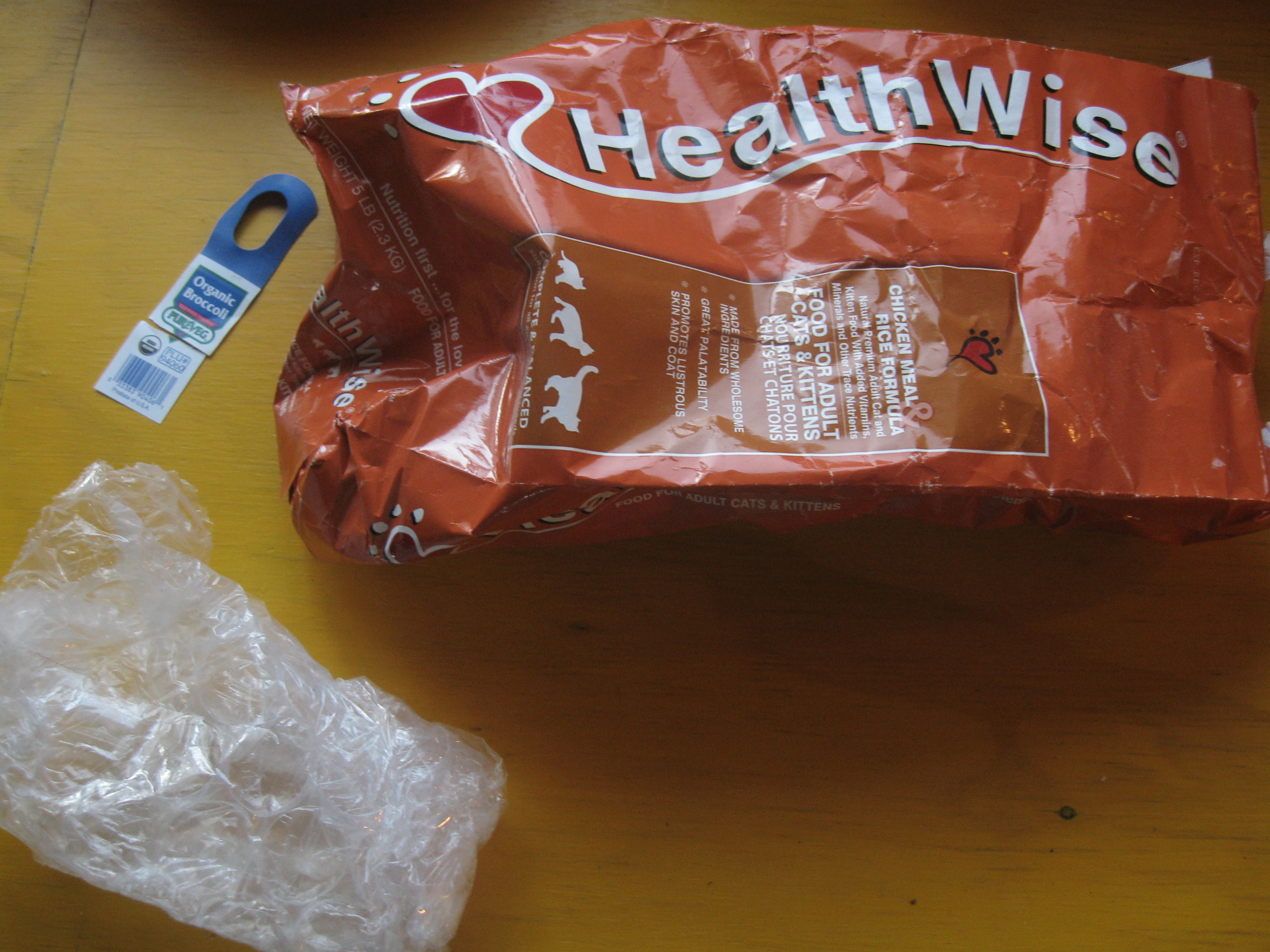
A broccoli tab, a plastic lined bag of cat food and some packing bubbles. Can I just that I had a whole lot more of those packing bubbles, but they’ve been stowed away in the shed in case of future shipping needs. I inherited a sewing machine from my grandma, and it arrived safely thanks to a sea of this stuff. My mom sent it for me, and I have to add that she also padded the box with some thrift store clothes she thought I’d like.

not included here is the bag of ice we bought for our road trip without even considering it was in plastic. An excellent example of how invisible plastic can be when you need it and have blinders on. Or the beer bag we got on that trip. And probably some other things, like the plastic wrapping on the neck of a wine bottle. Who saves plastic when they’re tipsy? Also, I don’t save things like olive oil lids with plastic inserts, or junk mail with plastic windows in the envelopes. Just to give you full disclosure.

Thanks for your interest in my trash! Have a nice day.

Good Green Words from Here and There

Here it is folks, the Long Awaited, Much Anticipated Old Recipe Garden Party Extravaganza.

Thanks to all who contributed posts, and to all of you who left comments about your passion for soil and sun and the miracles that take place in-between.

Christina of Tumbleweeds and Handful of Seeds wrote about falling in love with her tumbleweed farm. I am excited to follow her journey as a high desert locavore.

Renee at FIMBY wrote a beautifully illustrated post about…gardening for beauty, of course.

Nicola from Which Name?‘s post In the Garden also starts with beauty, but redefines it in terms of ecological function. I love when she writes, “My garden tells me to keep trying. I am listening and it is working.”

Shadymama from Adventures from the Motherland offered a piece of poetry after my own heart. She writes “i find myself paying more attention to the moon and my breath. to my feet on the ground, my soul and my needs. to presence and truth. these are the lessons of my land.” And lot’s more good stuff.

Emily at Laundry and Lullabies wrote about the joy of gardening, and tells her woeful tale of crabgrass. It made me feel better about my bindweed.

Rachel at 6512 and Growing pretty much rocks it with this post called I Dig Dandelions and Apricot Blossoms, and this one about a romantic manure interlude.

And my personal garden guru, Erin at Seedybeans, took a break from her customary dispensing of invaluable gardening advice to tell us just why she gardens. In the garden, she writes, “I have found myself as a woman, one hand marveling at our mothers mysteries, and the other spinning seeds and stems with my own gifts.” Ah, yes.

My own post can be found by just scrolling down a bit. Or if you’ve arrived here in some roundabout way, click here.

Lastly, I’d like to make Michael Pollan an honorary homegirl and include his ever relevant and motivating article “Why Bother?” in this lineup. I consider it required reading, and revisit it at least once a year when I need reminding of why I live this way. It’s ultimately about gardens, but everything else, too.

Mending the Land

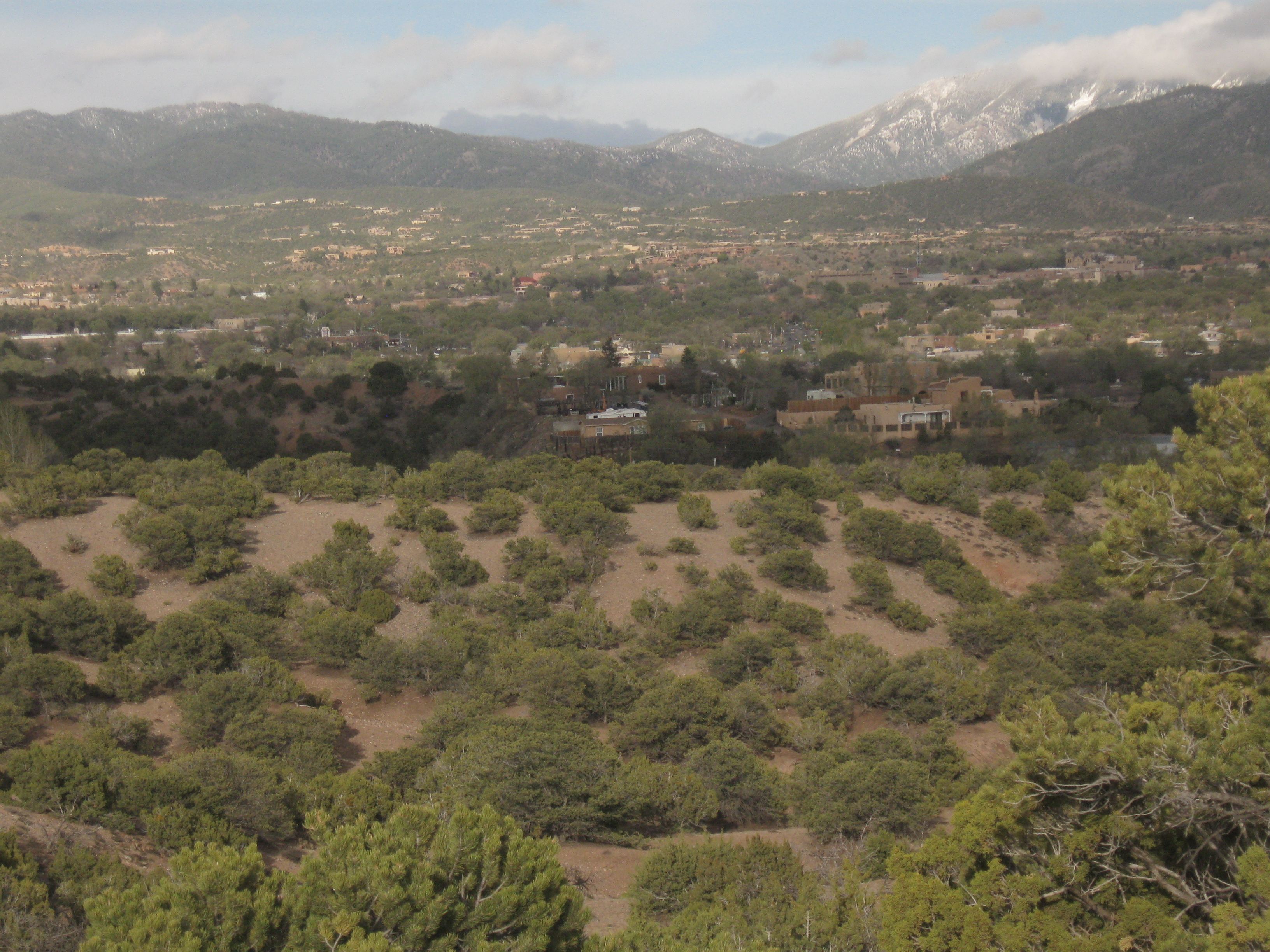
My garden is a small part of what I consider home. Home is the high mountains rising up in all directions and framing the huge valley with various watersheds winding towards the Rio Grande. This open space, with the vistas I know with my eyes closed and the trails I have followed in all seasons, is my home.

Pretty as it is, this is a landscape that has been severely altered and damaged in the last few centuries. Like so many things in the West, and, I suspect, landscapes everywhere, it is close to impossible to tell what is “natural” and what is a remnant of a once intact ecosystem.

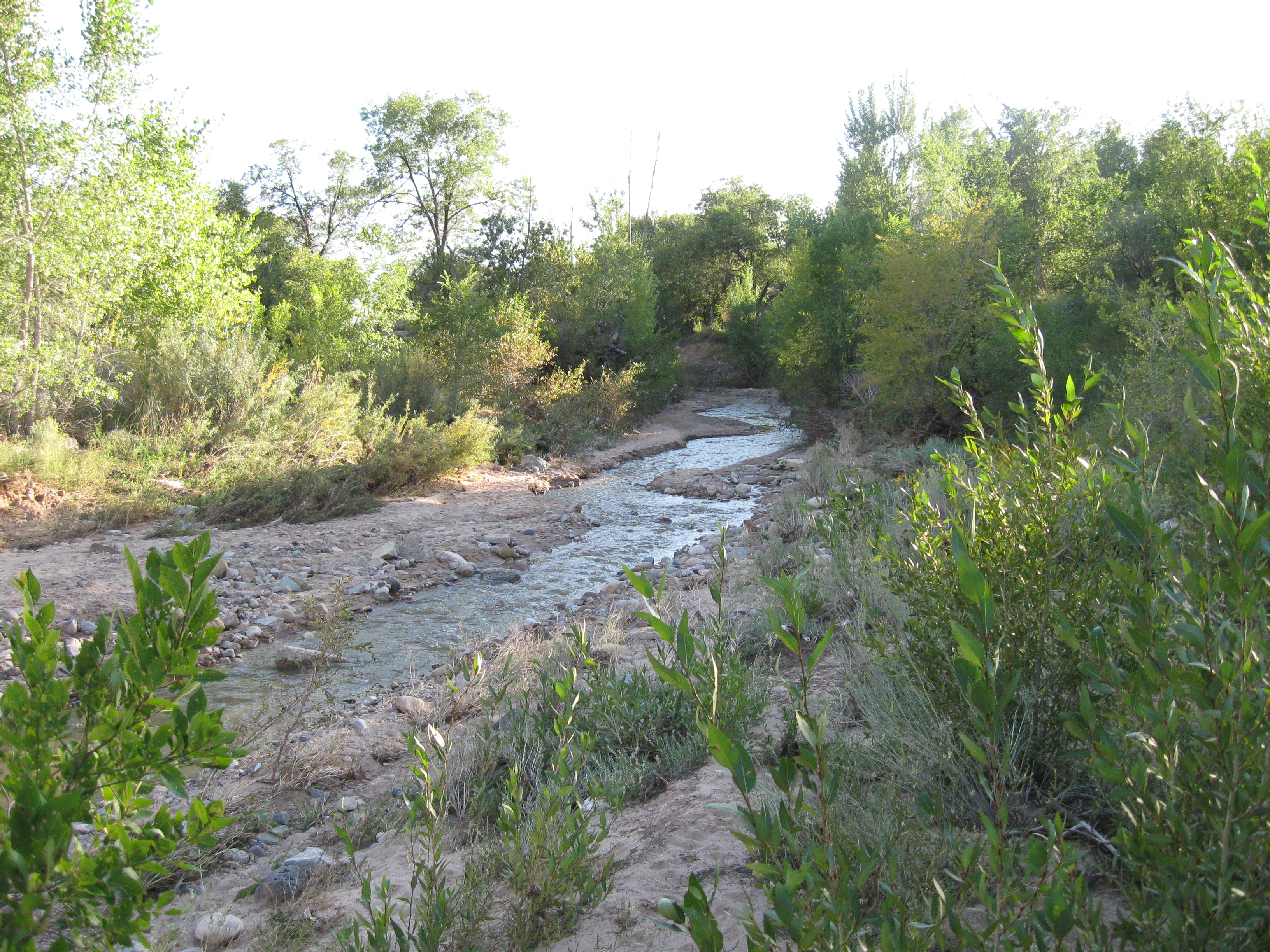
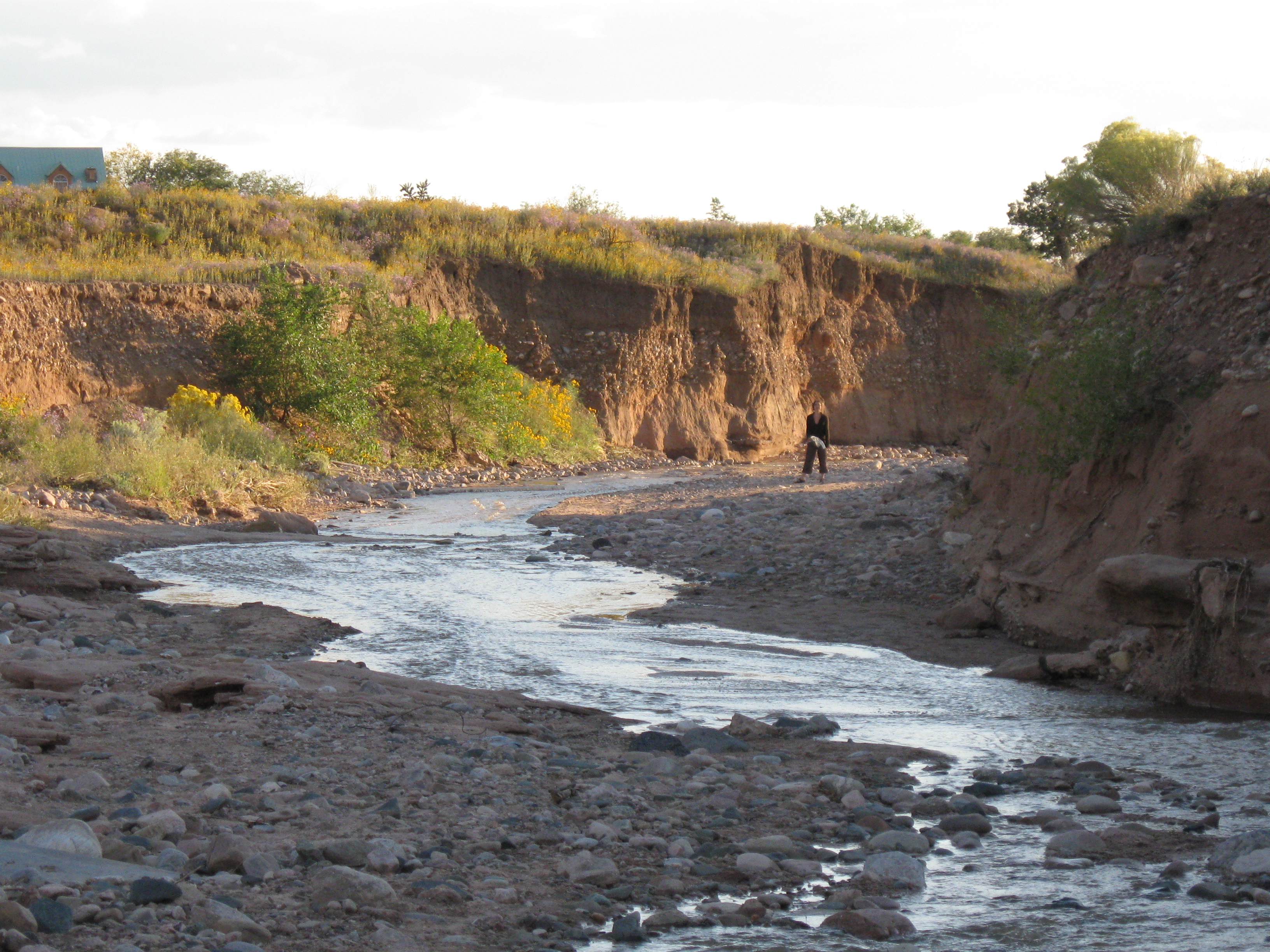
The other defining feature of my home ground is the river. Once free-flowing and healthy, today it’s dry as a bone save for what the city water managers decide to release from the reservoir that supplies this town with its drinking water. The river today is a deep, severely eroded ditch largely denuded of plant and animal life, and heartbreaking to behold. Despite this, we walk it almost daily. It doesn’t always run with water, but contains the flow of our days.

I say all this as a preface to my garden post, as a bit of grounding that will help you to see why I consider nurturing this small piece of land an act of healing. For years my garden has suffered because of my stinginess with water. I couldn’t justify watering a few lettuce plants at the cost of the river. My efforts at conservation yielded not much more than bitter greens. The city gives saved water to developers, the cycle of overuse continues. Now I see watering this land as an integral part of restoring the river. Water soaks through my rich soil, trickling back into the water table. The water I use nurtures a kind of ecology, devised by me, yes, in a sort of hit or miss way, but an ecology nonetheless. It sustains insects, bees, birds, and abundant plant life. It is a patch of soil that is fed and cared for rather than stripped and neglected.

Here’s the huge pathway that used to divide two of my garden beds. (Both of which were in the shade, as it happens.) I spent this spring turning it into fertile beds. Which brings me to another kind of healing–the gift that comes from regular connection with the land. From relating to it in the intimate way that is the gardener’s–touching, digging, sowing, watering, harvesting, smelling, sensing. From the give and take of energy exchanged. From the mutual care-taking that happens when one eats food grown from the soil one has fed. This is healing of another kind of cultural wound, the kind that comes from disconnection with natural cycles, removal from food production, and an acceptance of the loss to human and plant communities that is its inevitable result.

The next level of healing that takes place in the humble garden is of the broken system we are so entrenched in–the system that keeps us reliant on imported food, petroleum powered corporate agriculture, and an economic system that doesn’t aid our communities. At the same time we are shut off from our neighbors, our land, our water supply, and our own resourcefulness. It’s a question of dependency on the System vs. interdependence with Place.

So that’s why I water my garden now. By hand, often, and thoroughly. That’s why I turn kitchen scraps into black gold, and keep on trying. It doesn’t always yield what I hope for. But at the same time it yields so much more.

And each year we become a little more whole, my land and I.

Gratitude for the Journey

So much to say as our plastic fast draws to a close, but basically all I need to say is not much is going to change.

I’ll buy bleach, at last, and maybe rice cakes. And I’ll feel less guilty when I can’t resist a new ink pad for my rubber stamping.

But it’s been a good thing, this unpackaged life, and I’m feeling mighty grateful for all it has taught us.

Unexpected abundance, indeed.

Why cut short a good thing?

Our less-plastic life has been made possible by the old fashioned gods of making do and doing without.

I offer them my thanks, now:

To the ancestors, and the children yet to come;

To the earth, our home.

And to our expanding knowledge of how to live lightly and fully upon it.

::

Many thanks to all of you for sharing the journey.

It is far from over.

(PS, I’ll post our garden party on Monday so we can all enjoy a weekend offline. Still time to contribute…)

Flowers I Adore

I’m loving your garden posts.

Keep them coming.

I’ll post the whole collection May 1st.

For a refresher on what I’m talking about,

visit here and here.

Hope life is blooming all around you, too,

and that you’re finding your way out into it.